Why we need to adapt the education system
Guest author Mattia Rüfenacht on an education system that is beginning to fall out of time. And what we need to do to move forward.
(Reading time 4 minutes)
From birth, a person’s brain and behavior are designed in such a way that the individual continuously learns and develops. Young people pursue this process with incredible effectiveness and efficiency and even seem to enjoy it. Now compare this behavior and mindset with those individuals who have been part of the designed framework of the education system for a long time. It is frightening how big the differences between the observations can be.
School is compulsory?
Millions of children are not clearly aware of what the actual purpose of school is. For many, it is simply a duty above all else. I therefore wonder where exactly the turning point is where young people go from being “hungry for knowledge” to having the attitude “I’m fed up with school”. I still don’t have a solid answer to this and think that it may depend heavily on various factors. Whatever the case may be, most of today’s models of education are outdated. In this day and age, where information is easily accessible to almost everyone at any time from almost anywhere and at minimal cost, the reason to go to a conventional school is becoming more and more diffuse.
“Tell me and I forget. Teach me and I remember.
Involve me and I’ll learn.”
– Benjamin Franklin
Smart and non-smart people
In most cases, these school systems were developed by our ancestors and built for a different era. They were organized during a time of the intellectual culture of cognition and the economic conditions of the industrial revolution. The intellectual model of the mind held that real intelligence consisted of deductive reasoning skills and classical knowledge. Classical knowledge in the sense of academic dispositions and know-how. As a result, we were increasingly programmed to differentiate between academics and non-academics, between smart people and non-smart people.
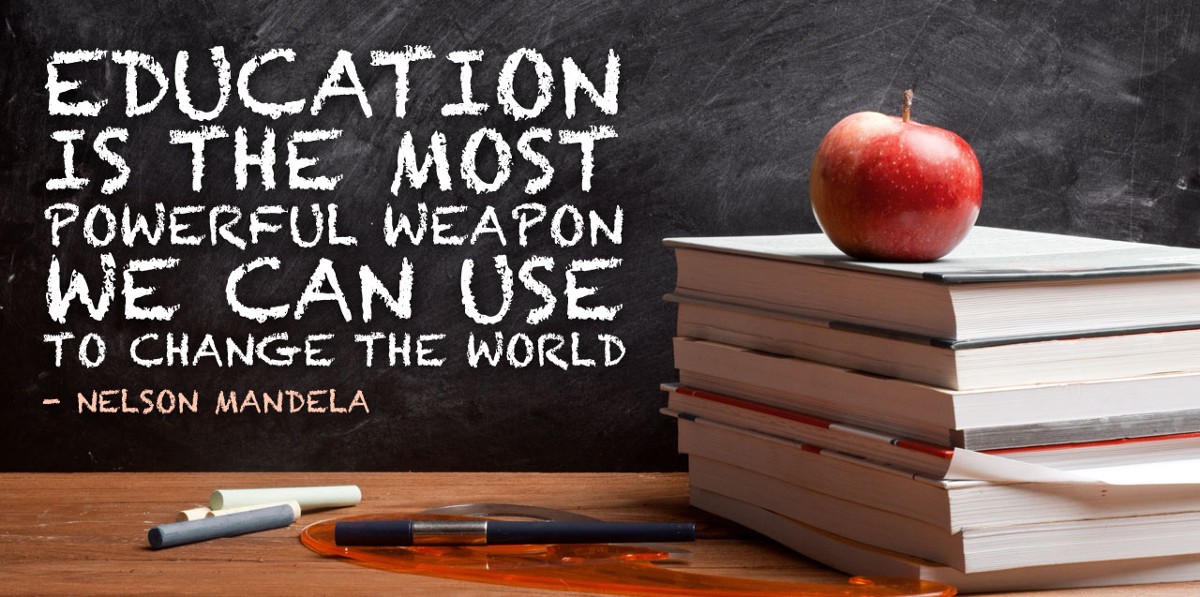
As a result, there are many who believe that you are not or cannot be brilliant unless you have a higher diploma of some kind. Or even worse, many brilliant people believe they are not. In my opinion, this is one of the factors that strongly influences the world we have created. A world where appearance is often priced higher than intrinsic value, at least in the short term. This phenomenon is potentially a major weakness for our society.
Learning Coaches
These circumstances lead me to the conclusion that teaching as an activity and education in general as a system must adapt to the new conditions and roles. Roles that require a transformation from “curriculum distributor” to “learning coach”. The new roles have the function of encouraging the natural passion and ingenuity of pupils and students, rather than maintaining the defense of in-depth knowledge and imposing a more or less predefined path for the masses on young people. Pupils and students need to be encouraged to question mediated knowledge and methods and to find new innovative insights as individuals and collectively.
During my own school and further education experiences, I have seen some teachers who, in their perception, fulfill this role. Nevertheless, there are also teachers who clearly stated in conversation that they were unable to take on and live this role due to the limitations of the system. And this is not due to a lack of personal desire. So the question arises: where exactly do these limitations come from and who is responsible for making it more difficult to realize significant change? It is probably relatively obvious that there could be a causal connection. So let me throw a provocative question into the room. What if the education system is as corrupt as many other industries and people are?
If we want to move forward responsibly as a society, I think we can summarize that the dramatic changes in the world of work and employment, and especially those that lie ahead, mean that the basis of a new interpretation of education must embody the values of sustainability and adaptability at its core.
Future scenarios
In my opinion, we are called upon to think clearly (again) about potential future scenarios. Thoughts about a world in which we ourselves want to live and prepare for our children and their children. Global interconnectivity, smart machines and new and emerging media are just some of the drivers shaping our understanding of education and work. The concept of a 100-year life is very likely to become the norm.
A significant amount of this time is spent learning and working, which means that the learning process as such will become even more important for future generations than it already is today. Most people will (have to) pursue a variety of different careers. This requires fundamental reorientation and retraining, while the pace of innovation requires at least constant new skills and knowledge to keep up. It is therefore time not only to define specific visions and goals, but also to work on concrete action plans to initiate the investments today that are needed to achieve the long-term goals.
In this social, economic and technological environment, every industry falls into one of the following three groups:
At this moment, your industry is either
a) has already been disrupted,
b) is currently being disrupted or
c) will be disrupted.
No industry or company, and therefore not education, will be able to completely escape this process, as it is part of a natural cycle of change. The good news is that disruption disguises itself as an opportunity, if you want to recognize it as such. It is an opportunity to design the future the way we want and need it to be. So let’s all take responsibility and respond with appropriate measures so that we can ultimately act again.
Artikel auf Social Media teilen: