
Teslas are now also cheaper to buy than the middle class – BMW, Audi, Mercedes and VWs.
As you know, one of my core theses with regard to the change in motorized private transport is that I assume that electric cars will prevail due to their inherently better and cheaper design. And that thoughts about environmental protection are in fact probably of secondary importance to buyers. This thesis has even earned me some vicious criticism from two sides. On the one hand from friends of the combustion engine, who don’t agree with it at all, and on the other hand from friends of the environment, who find such a statement reprehensible. However, recent comparisons show that at least the first thesis is slowly but surely being confirmed.
First the upper class, now the middle class
The Model S has taken the luxury class by storm, so to speak, and has stolen a lot of market share from its direct competitors BMW, Porsche, Mercedes and Audi.
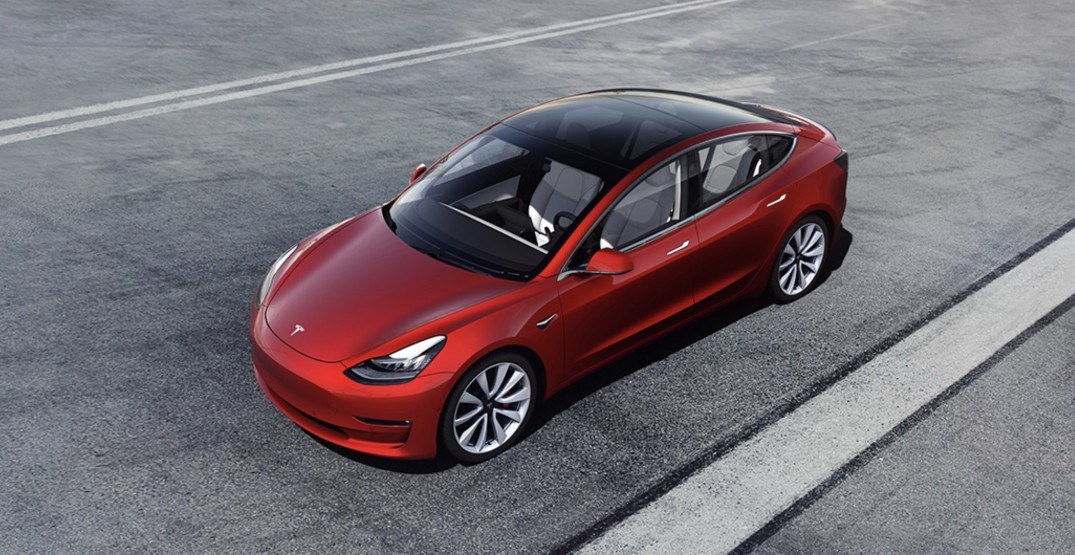
1.5 years ago, I speculated that the same thing would happen again with the Model 3. This is currently underway.
A sober look at the features – and price comparison
The reason for my extensive research is simply that my mother will probably need a new car in the next few months and I am helping her out a little, without being asked.
I didn’t expect a Tesla to be the cheapest mid-range option to buy. We have known for some time that a Tesla Model S usually beats even higher-quality mid-range models in terms of overall costs thanks to fundamentally lower operating costs.
I was therefore quite astonished that an A4 with comparable equipment is priced around EUR 8,900 higher than the Tesla Model 3 Longrange (4×4). A BMW 3 Series is even more than EUR 13,000 more and the Mercedes C-Class is, believe it or not, over EUR 25,000 more. Nevertheless, the Mercedes accelerates just as quickly as the Model 3, while all the others are significantly slower.
Ok, so far so good, I thought. We already know that the “triumvirate” of BMW, Audi and Mercedes is expensive. But the VW Passat, the comparative model, doesn’t look much better. It too is over EUR 7,000 more expensive to buy.
Cheaper even with the smallest motorization
Somewhat incredulously, I looked through the configurations again. And then made a second comparison. The same equipment but the smallest motorization at Tesla as well as at the traditional manufacturers. Surprisingly, the picture remains the same, although not to the same extent. At least the Passat is on a par with the Model 3 in terms of price.
As a result, I have configured many different manufacturers. The key question is when a car is comparable. If too many features are missing, it is not comparable in my opinion. I have always turned a blind eye in favor of the combustion vehicles. For example, stationary air conditioning is simply not available from any combustion engine manufacturer.
But if I had to close both eyes, the car dropped out of my rating. What remained were the German premium manufacturers and Skoda. According to my research, Skoda is the only car that can seriously hold a candle to the Model 3 in terms of cost. However, in terms of driving dynamics and features, it can only be compared with its competitors from BMW, Mercedes, VW, Audi and Tesla with a great deal of goodwill.
Download an overview of the entire comparison here.Yes, but the range
Many readers will now say inwardly, yes ok, but the range of the Model 3 is a problem. I can’t drive 1200km with it. That’s probably true, but I can’t do that with most other combustion models either.
To get a better estimate, I first converted all the specified (NEDC!) consumption values into approximate real values. I then set these values in relation to the tank volume and calculated a value for “days until the next refueling stop”. This is possible because we know the statistical daily mileage (around 39 km per day). I think this gives a better picture.
The differences then quickly become less significant. For example, the most comparable vehicle to the Tesla Model 3 LR, the Mercedes AMG C43, needs to be refilled every 15 days. The Model 3 needs a refill every 12 days. With the BMW, the gap is wider – 24 days vs. 12 days. In comparison with the Passat, the difference is considerable. Because the Passat only needs a refill every 35 days.
Critical minds will now rightly say: “I refueled quite quickly, charging still takes a while.” This is of course absolutely correct, but it must also be put into perspective. While I can refuel very quickly with a combustion engine, I can recharge often with an electric car. Both are advantages that balance each other out.
When I got my first Tesla a few years ago, I was worried that charging would be a hassle. I soon realized that it was exactly the opposite, as I simply plugged the car in every evening. Instead of more work getting energy, I had even less than in the combustion engine. Refueling was simply no longer necessary.
How can that be?
The reason why Teslas are becoming cheaper and cheaper is quite simple: battery costs AND consumption are constantly being reduced. And Tesla is radically passing these price reductions on to customers. This has happened several times in recent months, much to the displeasure of Tesla’s customers, and it will simply continue. What Tesla wants to do with this is create a huge market for the kind of cars that Tesla produces, i.e. electric, completely digital and ultimately autonomous.
Ironically, Henry Ford of all people is a prime example of this strategy. In 1909, when Ford sold around 12,000 cars, a Model T cost around US$ 950. Over the next 7 years, he steadily reduced the price to US$ 360 (with more than 0.5 million vehicles sold) through technological and economic achievements. Tesla seems to want to do exactly the same and there are a lot of good arguments for this strategy. Especially with regard to autonomous driving.
There are two important checkpoints in the business model for autonomous driving. One is the technological ability to do it at all and the other is having the largest possible fleet to scale the new services. Who owns the vehicle is completely irrelevant. The result is, as stated, an Airbnb for cars.
Artikel auf Social Media teilen: