The Internet will disappear! Get over it…
When I had lunch with Michael à Porta a few months ago, he said the great sentence “It’s good to see how digital is increasingly penetrating the offline sector”. Michael and his team develop solutions for interactive shop windows and other touchpoint technology, among other things. We talked about how digital technology is slowly but surely crossing the threshold of perception in everyday life.
Anyone who reads here regularly knows that I am very interested in society’s relationship with technology. I think it is fundamental to how, which and how quickly technology is adopted by the masses.
What happens when more and more data is available and computers are getting faster and smaller?
Two weeks ago, I had the honor of giving the keynote speech at the TYPO3 Conference 2015. It was entitled “Why you should think beyond Digital Transformation” and covered various elements of exponential progress and how we deal with it. The core message, however, was an introduction to the topic of the “Internet of Things”. Without mentioning it as such.
The no longer hypothetical question of what will happen in the future when more and more data is available and computers become smaller and smaller can only be answered by saying that the Internet as we know it will disappear from our perception. But first things first.
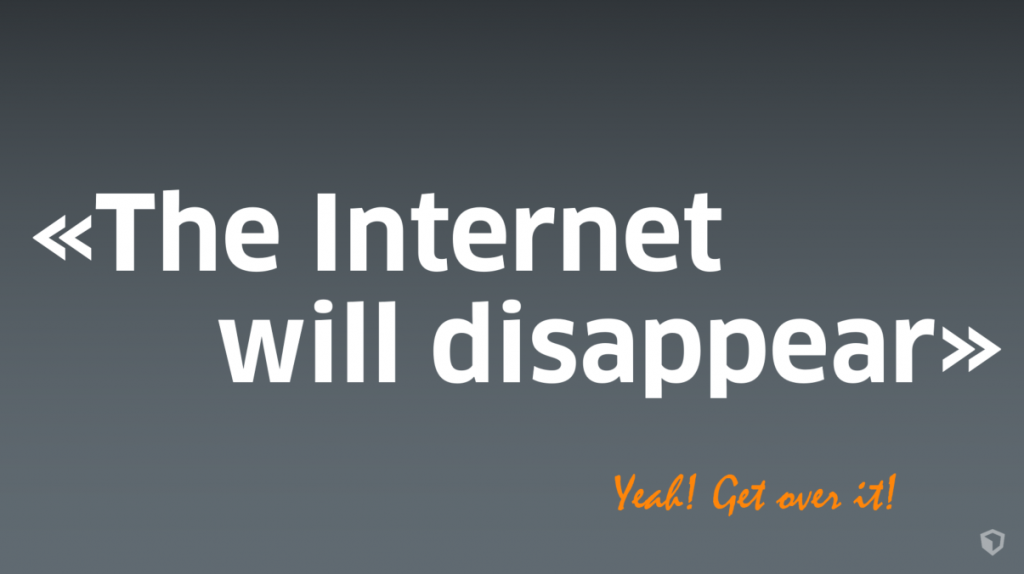
Especially in a room with a lot of people from the European digital economy, that is a fine provocation. Of course, the Internet will not disappear from a technical perspective. But…
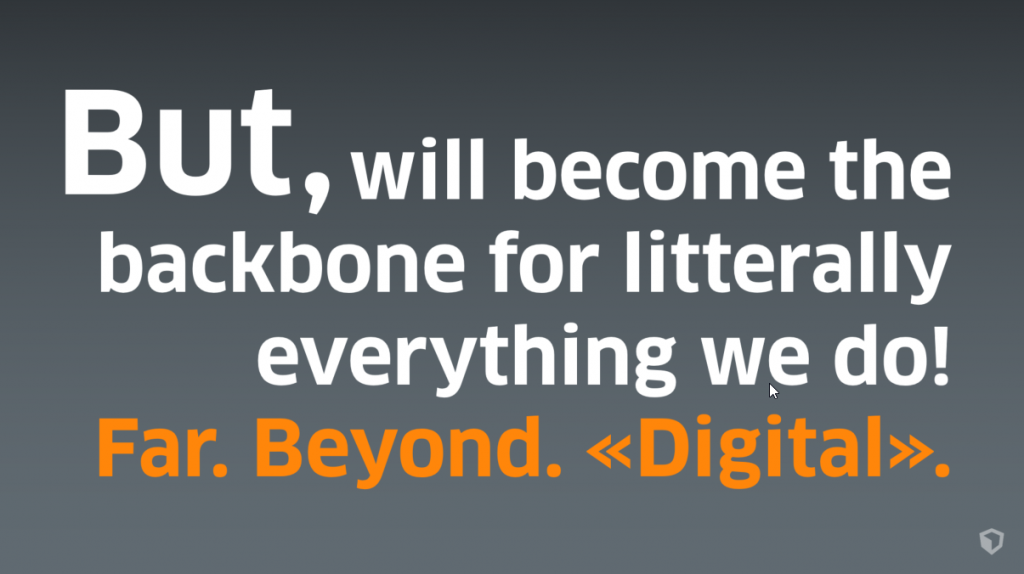
And:
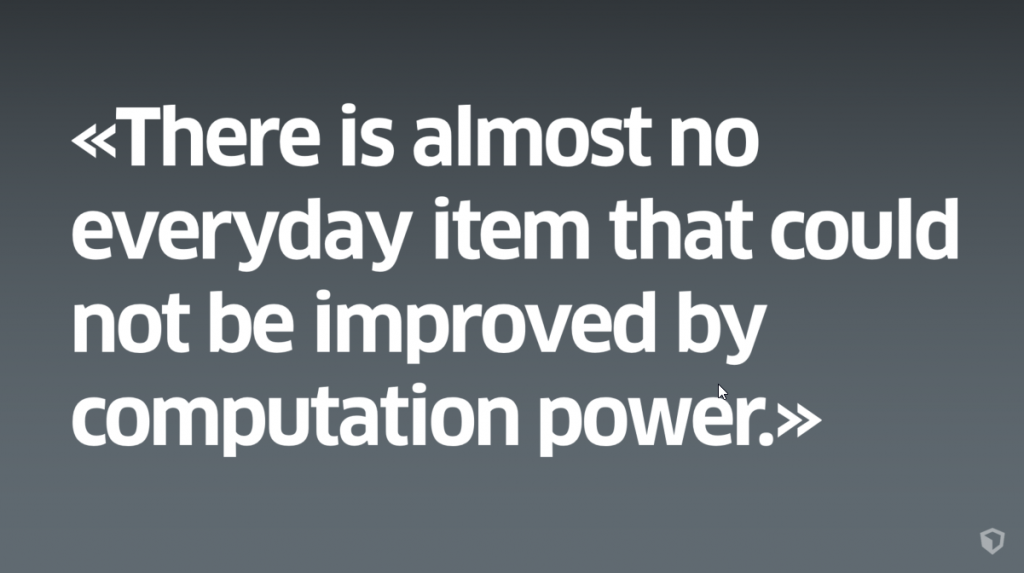
Two developments whose combined impact could not be greater
Technological progress has brought us two fundamental developments that can only really take effect in combination with the Internet:
Exponential growth in computing power
I’ve written so much about this that I won’t go into it any further. Powerful computers are becoming so small that we can place them anywhere. In other words, in all everyday objects that we know. So we can give all objects a certain “intelligence”.
Exponential growth in the amount of data collected
The amount of data collected worldwide is, what a surprise, also increasing exponentially. Thanks to the internet, all data will sooner or later be available to everyone. We still cling to the idea that data is something that has or needs an owner. However, whenever data is made available to as many individuals as possible, we see accelerated development. This is essentially why I think open source is a promising model for the future.
What can a light bulb that has computing power and all the data do?
Using the example of a smart light bulb, I have shown how technology can change this object. If the light bulb can calculate in milliseconds from all the available data whether it should switch on or off the moment you enter the room, this fundamentally changes the object. We will spend much less time dealing with things. They will simply anticipate our wishes and expectations. I think that’s exactly where the journey is heading.
Transition phase and scope with “internetted things”
I have put forward the following theory:
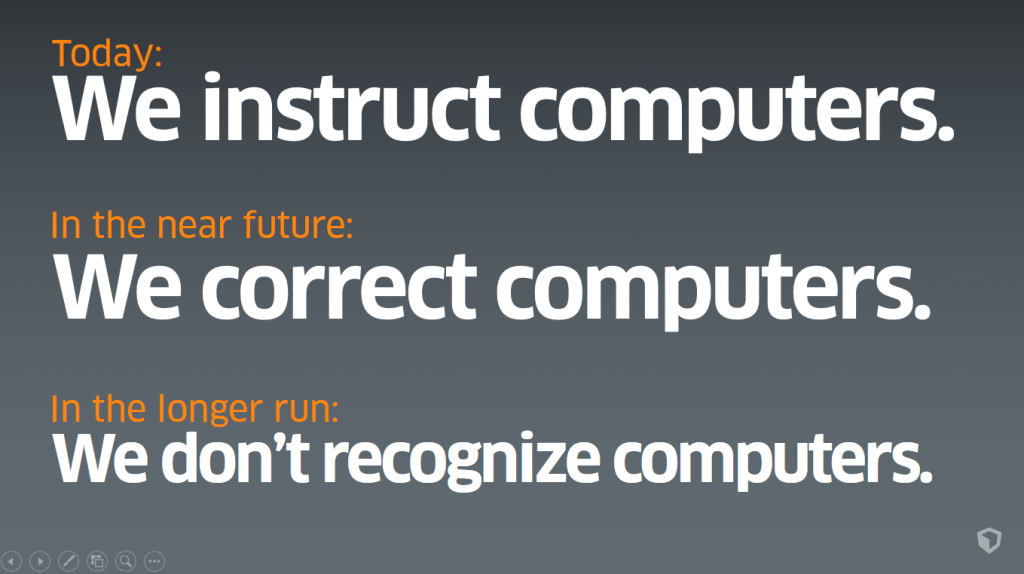
I don’t need to explain any further that we instruct computers today. We all give computers hundreds of commands every day. Even those devices that we don’t perceive as computers per se.
In a second phase, when we have more objects with intelligence, the objects will make initial decisions on their own and we will correct them if we are not satisfied with these decisions. Through our corrections, the computers learn how to improve their behavior next time.
Once this system has been perfected, we neither give the computers commands nor do we have to correct them. We will lose the reference to the computer in the object and then perceive the “action” of the object as a natural property of the object as such.
Generational issue
Perhaps my children’s children will no longer even know the lamp as an element to be operated. Light will be available for them and it is completely normal that it is always there when it is needed. Without them having to worry about it.
You can watch the whole talk here (the slides have been edited):
The TYPO3 Conference was packed with exciting presentations. It is worth looking through here.
Artikel auf Social Media teilen: