Why we must not let the 1920s degenerate into a decade of fear!
If the 2010s were anything, then they were the years of “digital transformation”. Slowly at first, then ever faster, the certainty grew that digital technology and its application would change our proverbial daily lives. And that is exactly what has happened. Ten years later, it is difficult to find areas of life – let alone things – that are still the same as they were 10 years ago. It feels a little like we’re done with one development – but appearances are deceptive – in truth, we’re only just at the beginning of many more highly synchronized changes.
Technological progress
Technological progress is accelerating, which means that more and more is becoming possible. Natural restrictions are falling away, the unthinkable is becoming conceivable and the number of options is increasing. You would think that this would be a good thing and that life would become easier in both private and business life. However, the opposite is the case; having more options requires more thinking and thinking costs resources. You may think this is ironic. It is not; in fact, the human organism tries to reduce energy-consuming activities. At the top of the list is thinking.
Anyone who has children probably knows this very well. You can make yourself unhappy as a parent early in the morning by offering small children a large number of breakfast options. They can never make up their minds. It is difficult to choose from a variety of options. The less you can evaluate these options, the greater the fear of choosing something wrong or missing out. This situation leads to not making a decision for a long time, which only makes the whole process more painful.
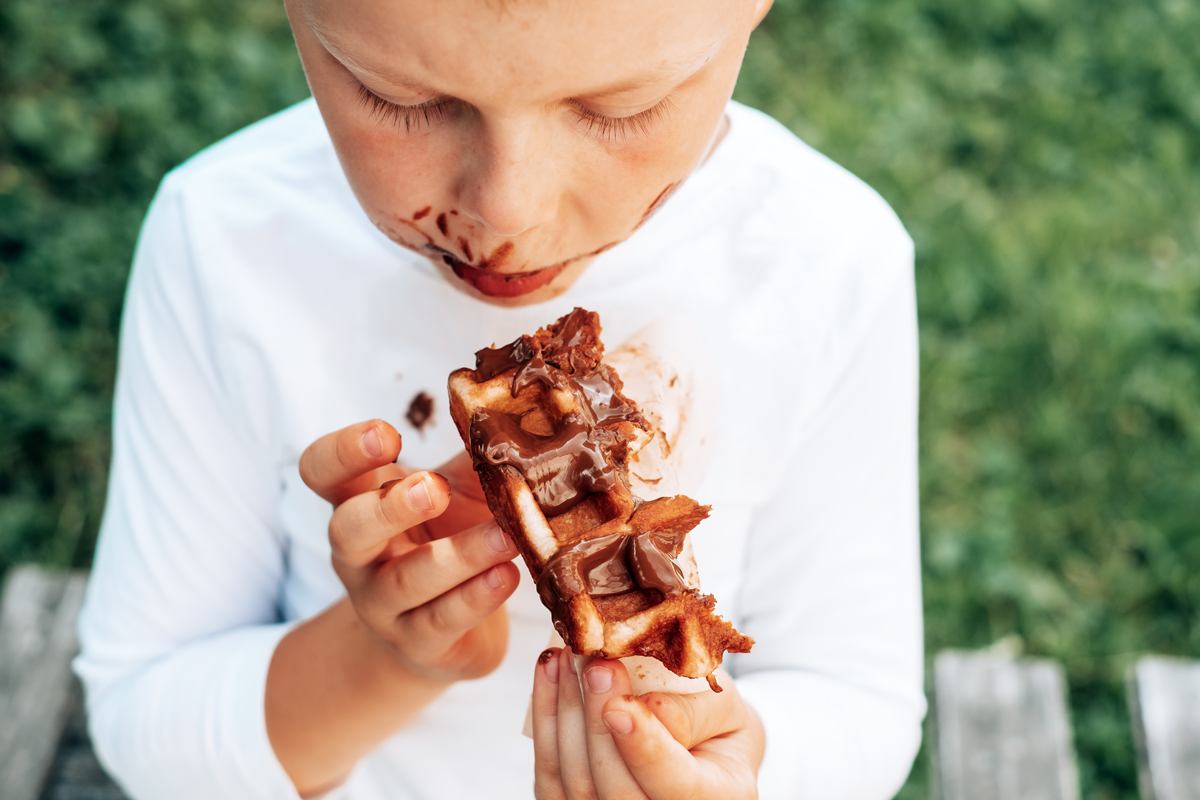
Having fewer options is therefore a considerable advantage – you can make decisions faster and with less pain. Children show you this directly.
A world of “trillions of options”
As a society, and therefore also as an economy, we face this abundance of new options with the same considerable difficulty as the children at the breakfast table. It is even more difficult for us: while children have to decide for themselves whether to eat jam sandwiches or muesli, we are forced to make decisions for entire population groups. That can only lead to trouble.
And new options are constantly opening up. The boundaries of what is conceivable and therefore feasible are constantly shifting.
A world of changing constants
The speed of technological change is gradually becoming tangible and perceptible. We can no longer avoid it – even if we try to dwell on the past. The “tried and tested” is mostly just “old” and is becoming less and less “tried and tested”.
Moreover, the Western world has not experienced a war in the last 80 years or so. Fortunately, of course. Wars, it has to be said, have always been cathartic events that have created space and opportunities for a new “set-up”, for a new social plot in a short space of time.
In addition, people today have much more to lose in purely material terms than they did 20 years ago. In many conversations I’ve had over the last 12 months, I’ve sensed this fear of losing something. I think the fear of losing something outweighs the hope of gaining something. It feels like everyone would immediately take the chips off the table and then doze off for the rest of their lives in a “comfortably numb” way without risk.
“When did it become hip to stop taking risks?”
A decade of fear looms
In this social climate, this pandemic comes at just the right time. I know, it sounds bitter – of course nobody wants an epidemic to wreak havoc.
But the fact that options are reduced, that fear is accepted, corresponds to the new zeitgeist of a super-solvent world. Today, you can categorize almost everyone into a fear category – some people are afraid of illness, others are afraid of restrictions on their freedom and a third group is afraid of losing their livelihood. Take a mental test with your circle of acquaintances – almost everyone can be assigned to a group. The fact that such deep rifts have opened up in our society in recent months is due to the simple fact that the fears of one group are incomprehensible to the other. And most people’s fears cannot be overcome with rational arguments.
“The only way to overcome fear is to go through it”
I believe that even without Corona, we were facing a decade of fear. Corona may even help us to understand that much of what seemed safe and a given may be gone tomorrow. It is certainly gone if we let fear guide us. And yes, most people are doing this extensively at the moment. It doesn’t even matter whether the fear is justified, because even if it is, it doesn’t help.
We are in demand
We, the “current shaping generation”, are more in demand than ever. We are shaping our children, the spirit of the future. We are shaping the future that will take place without us, through the mindset that we pass on to our children today.
We would do well to internalize hope as the supporting element. Hope for a great future, hope for a world that creates new and beautiful things, hope for a world that bears much less suffering – and a world that manages to overcome even the greatest challenges. We are the best version of humanity, even if our self-image is quite skewed at the moment.
The challenge we face is also so great because – to put it simply – it is much easier to have hope when there is nothing left to lose.
“The core of the challenge for us as Western societies is to act hopefully even though we still have a lot to lose.”
How do we teach our children that it is worth plunging into the unknown, daring to try something new? To choose adventure over the safe path? To explore new things, to do better, to develop an irrepressible desire and hope for tomorrow? Right, by setting an example for you. Start today, don’t let the 20s turn into a decade of fear.
Artikel auf Social Media teilen: