Buzzword bingo 4.0 in times that cry out for a paradigm shift.
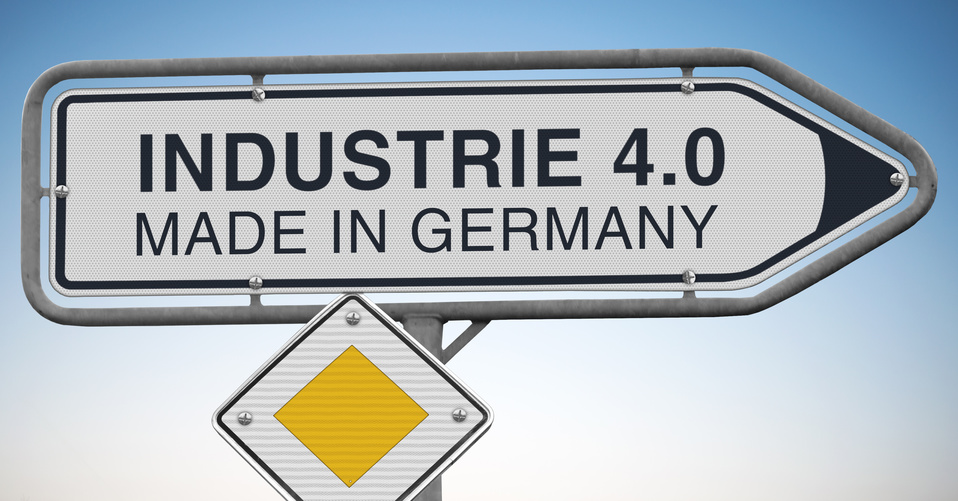
The reason for this article is a book from the digital corner. For weeks now, I’ve been amused, annoyed and irritated by the fact that it’s obviously part and parcel of today’s world to label everything “4.0”. This book is the culmination of this development. It’s called “Germany 4.0“. The byline: “How the digital transformation succeeds”. If you read here regularly, you’ll know that it doesn’t get much worse than this. An article about paradigm shift vs. symptom treatment.
(Reading time: 6 minutes)
Buzzword bingo: no one is immune.
I find it worrying that even established and respected (even by me) protagonists of the digital scene are apparently not immune to bullshit bingo. Or perhaps there was previously another, less “trashy” book title, which was then killed off one morning in the Springer office by the publisher’s assistant with the sentence “It just has to be sexier”. Quite possibly. After all, “4.0” sells these days.
Mediocre but correct, well, verbiage
If you read the book, which I did to myself this morning, you realize that the title is probably not so wrong after all. It contains a lot of interesting and interesting facts , but somehow doesn’t get to the point. It follows the typical pattern of “- cite>study ->micro findings -> comment ->is good”. A bit like having lunch with people where you can’t feel what they stand for and what drives them and at the end you leave with the eerie thought: Is there possibly nothing more?
A so-called “DIGITAL PARADIGMA” is inserted every few paragraphs in the book. It reads like this:
The lessons learned from the first phase of digitalization lead us to the second DIGITAL PARADIGMA of the economy: the game will not be won by playing defensively. We need more daring entrepreneurs like Oliver Samwer who are prepared to take risks and think big. The malice that accompanies failures in this country is the wrong signal.
The problem with these “digital paradigms” is that they are not wrong, but are largely just truisms. And whether we need more Oliver Samwer is something that can be argued and copied. If I were free to choose, I would rather have more risk-taking, socially-minded, medium-sized entrepreneurs who bring new products to market with new technology.
Digital transformation 4.0
It is well known that I think the concept of “4.0” is way off the mark, and that no one has yet had anything to argue against it, and that I think the term digital transformation is extremely misleading for business people. So I’ll spare you that here. I’ll mention it anyway. You can read it for yourself.
4.0 Metaphor
This whole version number metaphor originally comes from software development. Versions are designated in this way. And that’s where the error begins: A 1.0, 2.0, 3.0 and 4.0 implies that we only need to expand our “social and economic code”, add a few new functions, a few new icons and that’s it.
“What we need is not another version, but a refactoring of Germany.
”
But that is exactly what will get us nowhere. Our social and economic code, if you like, has a considerable amount of “digital debt”.
First principle of technologically driven change
The emergence of digital technology and complementary technologies is a fundamental paradigm shift. A fundamental paradigm shift is also needed to deal with this as a society and economy. We don’t have to throw everything overboard. But we must learn to understand that we should anticipate technological developments as early as possible. And that this is also a long-term thing.
After all, once the developments become widespread, it will be too late for some sections of society and the economy to keep up.
Short-term actions – long-term foresight
A central problem of orientation in this process is the combination of longer-term strands of knowledge, or first principles if you like, and necessary short-term measures. The dilemma in this respect is that we misjudge technological progress: We systematically overestimate its short-term effects and underestimate its medium/long-term impact. This is the underlying problem with all issues relating to digital transformation.
The challenging thing is that you should do neither one nor the other. For example: Every reasonably alert industry leader knows that the production of material goods will look completely different in the next 50 years. If I am in a manufacturing industry, what do I do with this information? In the short term? What do I need to do? What is smart? What is responsible? It’s really difficult. And can’t be learned anywhere. Not even in a how-to book. That’s why “not doing much”, this widespread discipline of “digital symptom control”, is such an attractive “option for action”.
What we really need!
But lest we remain in a similarly diffuse sphere as the one I hold against the makers of the book: Here are a few concrete paradigm shifts that will contribute to a great future for Germany, as for all Western countries.
The days of administration are over: a return to entrepreneurship
A large part of the problems arising from the effect of digital transformation actually lie in the skewed view of today’s economic players. With the replacement of the founding fathers by the generation of managers, the idea of managing the business was established. The idea was that a business could be run for decades.
This has worked for the last 80 years, but is historically extraordinary. This assumption is particularly devastating: we are now standing here with an assembled management team that has a perfect command of all the KPIs and models taught, but has no real plan for how to respond to change. And even worse: they don’t even see the new business opportunities. They are much more afraid of losing something than they are of gaining something.
What we need are real entrepreneurs. Those who think big, are prepared to take risks and tackle new things. This is almost an anti-concept to today’s business economists. Establishing better and new products and services. We had this around 1900. This spirit must be reawakened.
Industrial paradigm shift: the end of the manufacturing industrial nation
Western industrialized nations must say goodbye to production (20-30 year horizon). I know, now you’re catching your breath from left to right. It is inconceivable that the production of sophisticated goods should no longer be our core competence. But it will happen. Manufacturing technology for today’s familiar goods will become so efficient that only a fraction of the people will be needed. In addition, production will be individualized and decentralized. The production infrastructure as we know it will become much less important.
So this will be a “rat race” on the spiral of cost reductions. Downwards, mind you. Something that a country should be committed to? Probably not. This is an issue that should be addressed today.
Promotion of start-ups
Specifically, I miss the promotion of start-ups in Germany and Switzerland. When we think of support, we think of aid programs, business awards and location promotion. These are all noble efforts. But it is far too little.
All start-ups need massive support, not just tech and software start-ups. I still don’t understand why politicians don’t recognize this. In Switzerland, agriculture was subsidized with CHF 2.9 billion in direct payments in 2015. That’s almost as much money as the federal government spends on road maintenance.
By contrast, there are practically no subsidies for start-ups. We would rather invest massive economic resources in our dying past than in our future. This has to stop, on both sides.
Community policy
The better off the children are, the more nonsense they get up to. It’s no different in politics. We urgently need people who act as a whole again. When did the idea that you can get ahead in a country by working against each other become established?
We need to get back to the idea that we are only strong together. This unspeakable left-right thing must come to an end. 80% of all efforts in politics are spent on this hiccup. Over there probably a little more than over there.
We have to learn that in a democracy everyone, really everyone, belongs. The angry citizen, the nationalists, the do-gooders, the ecologists, the lying press, the old hats, the normal people, the intellectuals, the backward people, the eternal tomorrows. Simply everyone. Everyone has the same rights and the same duties. After almost 100 years of peace in core Europe, we have to learn to deal with peace. Sticking together in bad times is easy. And we must learn to keep our political composure. This has enormous implications for progress and our (technological) future, because only a common policy with a sense of proportion will prevent technological paradigm shifts from causing severe social pain.
And yes, we need zu Guttenberg as chancellor, if only because he is one of the few people in Berlin who can tell the difference between Instagram and Snapchat. Seriously: we need politicians with digital skills. The basics, mind you, are enough for now.
Put in the work!
And last but not least: we need to make work a virtue again. We need a redefinition of work, in the sense of doing something. Not of having to do something.
We live in a world in which people have more opportunities than ever to decide what they want to spend their time doing. No, not everyone, and not everyone always and everywhere. But on balance. After all.
But we have to collectively get up off the sofa. And get back to life. Create new things, do things. Not only if we are financially compensated for it. It won’t work without work. All great things, big or small, happen because we do something. Not because we wait for it.
You can do better
You may wonder why this article is so offensive. The reason is simple: it bothers me enormously that thought leaders like Tobias Kollmann and Holger Schmidt could do better. They could be more specific, more honest. Who, if not us, who deal intensively with digitalization, should provide business people with real, and uncomfortable, insights?
Artikel auf Social Media teilen: