The digital transformation obstacle.
Even though I actually like talking about it less and less, I still get a lot of questions about why established companies regularly miss out on the technology-driven changes in their environment and get caught in the ambush. People often refer to the “innovators dilemma”. In my opinion, however, this falls short in today’s world.
(Reading time: 4 minutes)
Can’t really be
It never ceases to amaze me that established, large companies do not seem to grasp long-term changes and are increasingly falling behind. I think we see this more and more “beautifully” in the example of the German automotive industry – the current favorite object of observation of every observer of economic upheaval.
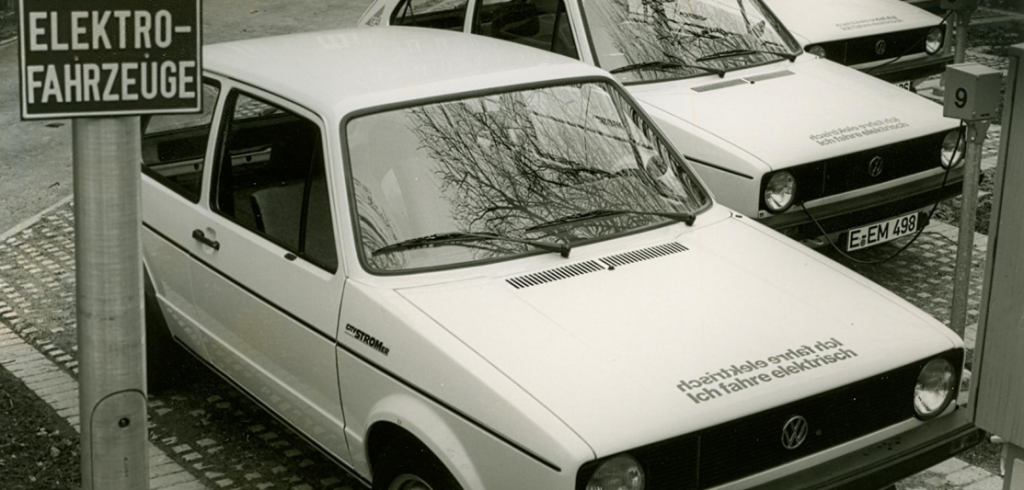
Anyone who has followed developments over the last two months will be amazed. All German car manufacturers have major technical problems, cannot comply with the guidelines they have approved, have to postpone the market launch of electric cars, cannot deliver the existing electric cars in the quantity ordered, are heavily invested in the “wrong technology” – diesel – but have to get out of it and suspend the sale of new cars because they cannot manage to certify the cars in accordance with the new regulations.
On the other hand, we see Tesla – under constant journalistic fire – playing a relatively classic scaling case for start-ups, which seems to be working out more and more. Tesla is the market leader in the large luxury sedan segment with the Model S in the USA and in many European countries. With the new Model 3, its little brother, it has also just achieved market leadership in the USA. The time from the first development to taking over the market leadership of the Model 3 was one of the shortest ever achieved in the automotive market– if you ignore the overambitious deadline promises of the Tesla CEO. And Tesla will produce more EV batteries in the next quarter than the rest of the world’s manufacturers combined.
That can’t really be the case. Mercedes, for example, has much more experience in almost everything that is needed to build electric cars, more capital, more know-how and has had many more and better engineers for a long time. How can it come to this?
(You are welcome to use an example other than Tesla if you have sensitivities in this regard. There are now candidates in practically every industry).
“Innovators Dilemma”
An almost classic answer to this question is that the established players have succumbed to the “innovators’ dilemma”. A central thesis of the “Innovators Dilemma” states that established companies are therefore unable to drive innovation on a large scale because they follow the classic rules of the art of management, which systematically leads to the sole management rather than the further development of the existing business.
I think this is actually an effect that still plays a role. But times have fundamentally changed. Large corporations all have their innovation departments, their scouts. Fail-fast, design thinking and agile development have not just been an issue since yesterday. Even if existing business is being managed, people are well aware of what needs to happen.
A management member of a large consultancy firm in Switzerland put it to me like this: He knew very well that if his company did not change its business model and technology, it would probably be dead in 10 years.
Unfortunately, knowledge does not necessarily lead to correspondingly derived and stringent action.
I don’t think you can say today that companies are no longer aware of the long-term pressure to change. In my opinion, there is no longer a classic “innovators’ dilemma” as it was conceived 20 years ago.
“Success lethargy”
I believe a key component of why companies don’t tackle radical change is what I call “success lethargy”.
I believe it is anchored in the core of the human psyche, both positively and negatively, to only do or change something when the effects on oneself become imminent.
As a general rule, I think you can say that those who tackle change before the effects of a development are obvious are successful.
This effect can be observed in children. At the beginning, children find it extremely difficult to assess what effects their actions now will have in the future. They make decisions based on their immediate impressions. Even if it is foreseeable or they are told that these decisions will not have a positive effect in the long term. Only when the consequences are very directly foreseeable do they change something.
In my opinion, this also happens in business. The current success is too tempting to want to sacrifice it for the future.
“Nobody changes a game that is going in their favor.
”
But that’s exactly what it’s all about: proactively changing the rules of the game and thus the game itself.
Assessing technology development from a business perspective
The other point that I think many companies don’t get right is correctly assessing the impact of the development of new technology on the business aspects. I also believe that this has happened to traditional German manufacturers.
They had already taken a very close look at the electric car in the 1980s. Even then, they realized that the electric motor on its own was a much better drive.
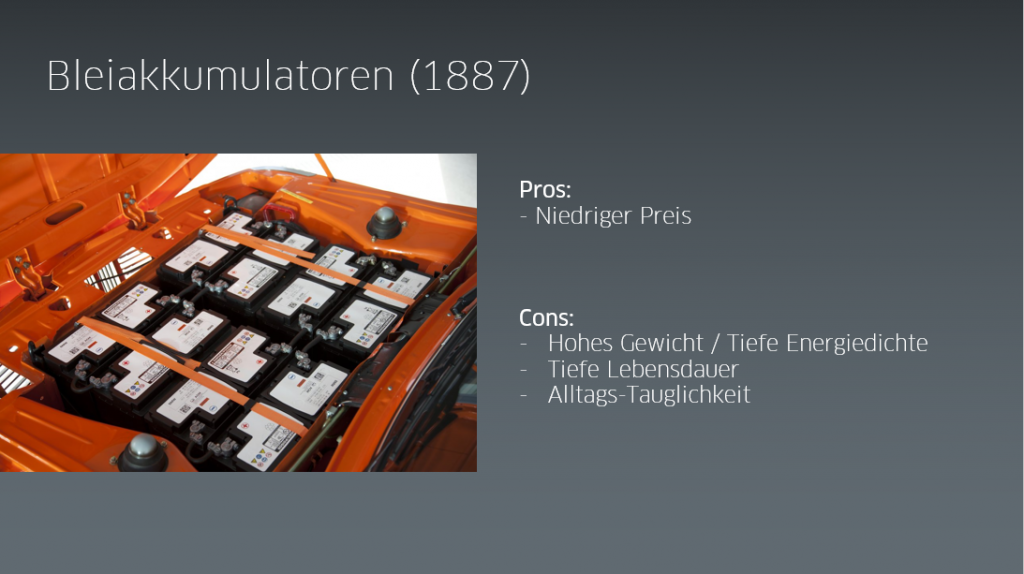
The batteries, at that time lead accumulators, did not cost much, but had considerable shortcomings in operation. Because it looked like a possible alternative on paper (and the price of oil also played an important role), these concept cars were built. Only to gradually realize that they didn’t actually work.
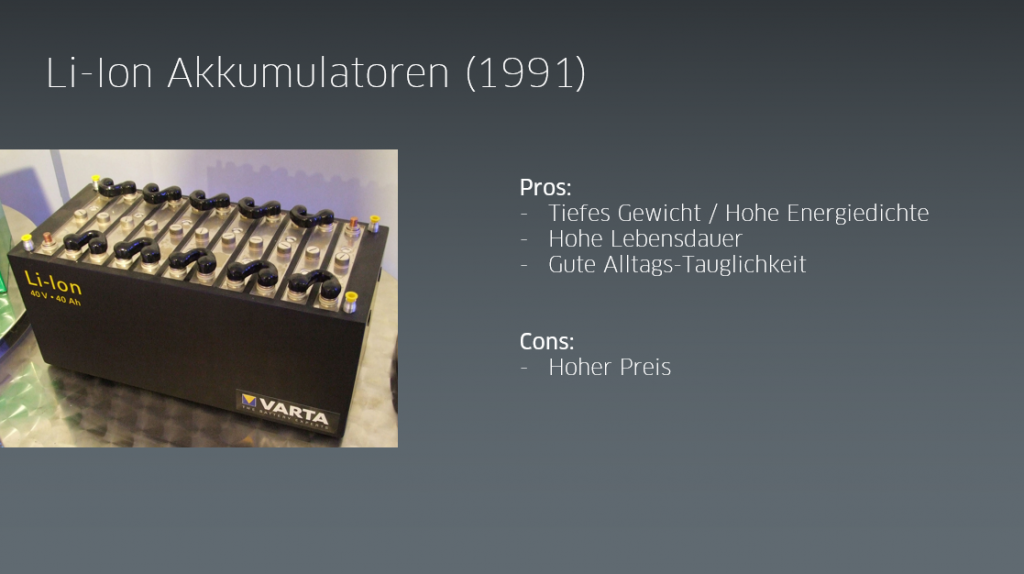
When the first lithium-ion batteries came onto the market in 1991, the situation was reassessed. Lithium-ion batteries do not have the disadvantageous properties of lead-acid batteries. Their weak point at the time: the enormously high price.
This made it clear to the car industry that the electric car would not work. This mantra still holds true today, albeit increasingly behind closed doors.
After that, the development of this technology must have been completely lost sight of in the automotive industry (with the exception of GM). There is no other explanation for the fact that only one small manufacturer had closely observed the cost development and acted accordingly.
Tracking developments instead of assessing current circumstances
That’s why I believe that for all entrepreneurs who do or want to do something fundamentally with technology, it is not the consideration of existing distributions and circumstances that is important, but the development and duration and distance until a technology achieves business relevance in a scenario.
This was astonishingly obvious as far as lithium-ion batteries were concerned. Specifically, it has been observable for years. The few suppliers who recognized this have had an enormous amount of time to position themselves in recent years. And they will play this position ever more strongly in the coming years.
Artikel auf Social Media teilen: