Why autonomous driving is the big thing of the next 10 years!
The self-driving car has polarized people like few things before it. On the one hand, almost everyone has some kind of connection to the car. Even those who completely reject it. On the other hand, it seems inconceivable to entrust one’s life and limb completely to a machine. Whether we already do this in other areas doesn’t seem to matter. While this apparently unimaginable thing is on people’s minds, the vast majority of people do not realize the impact that autonomous driving will have on our society and therefore on our economy. Quite simply, hardly any area remains unaffected.
(Reading time 7 minutes)
Social adaptation of the first comprehensive, autonomous technology
The next 5 years will be very exciting for all observers, because the technology first has to really get onto the market on a broad scale. And it will have to fight its way through the whole jungle of legal adjustments, social acceptance and technical challenges.
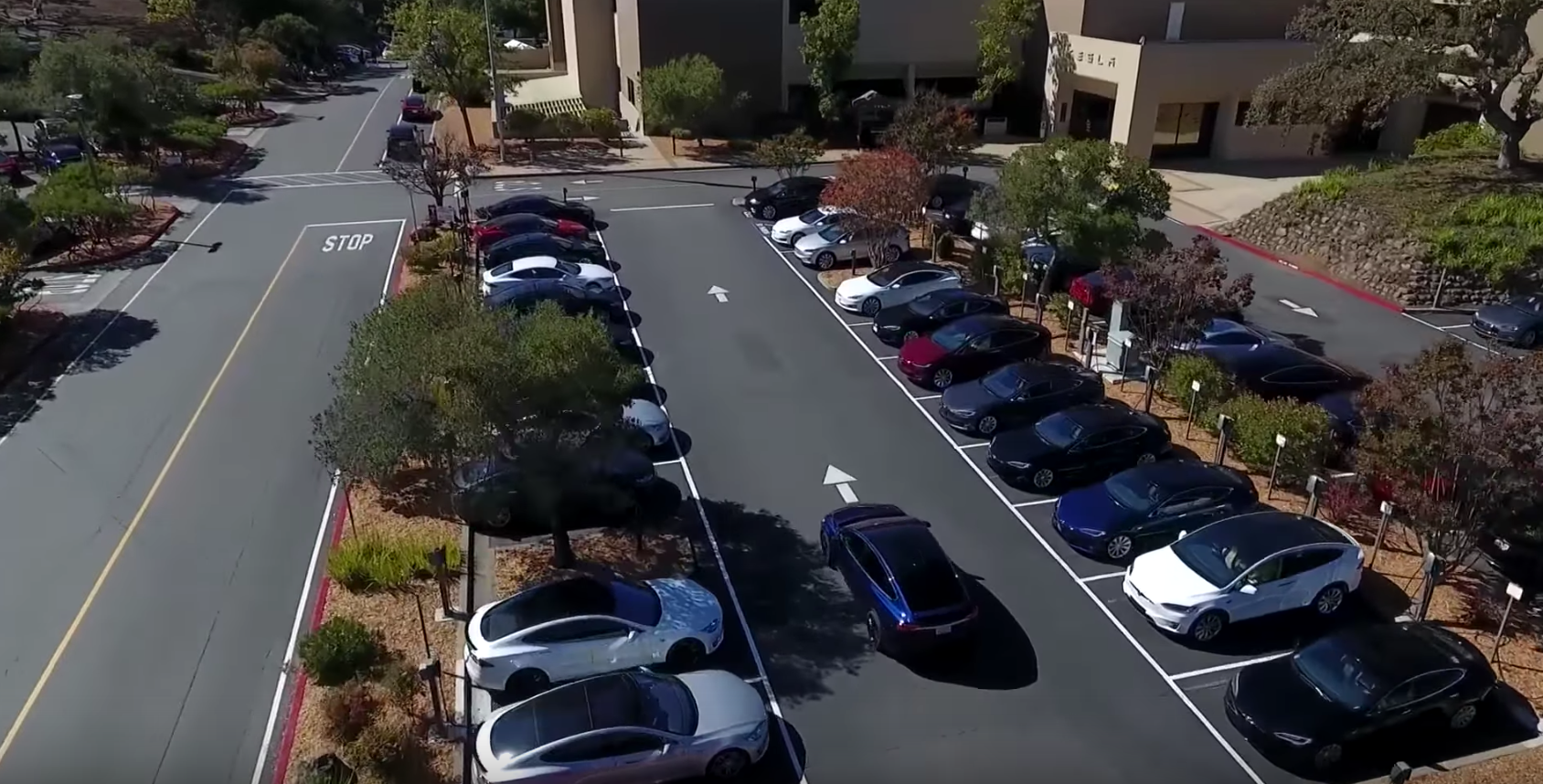
However, the fact that autonomous driving is possible is no longer up for discussion. There are various manufacturers, most notably Nvidia, who are currently demonstrating that self-driving cars already exist on a basic level. And that it can also drive on public roads.
However, having a technology does not necessarily mean having a product. A lot still needs to happen for this technology to become a product. The technology must be further developed and refined. That is one thing. The other is to create a database that convinces authorities and insurance companies that autonomous driving is associated with fewer risks than human driving.
Because as soon as a manufacturer can statistically prove that its system is safer than human-driven road traffic, it will be extremely difficult for licensing authorities and insurers to close their doors in the medium term. This is one of the reasons why Tesla has been collecting driving data from all its vehicles for some time now. Anyone who has this data can use artificial intelligence to create a better product. But they can also use this data to literally put it on the road in regulatory terms.
Accident cause No. 1: The human being
The vast majority of all accidents at the moment are caused by human error. I believe it is basically quite easy to make fewer mistakes than humans, as humans make many mistakes extremely carelessly. Just think of drunk driving, excessive or inappropriate speed, microsleep, lack of attention and distractions as causes of accidents.
However, as we drive our vehicles ourselves, we succumb to the feeling that we have things under control. There is nothing worse for human perception than being injured in an accident through no fault of our own. This is not logical and lacks any basis. But it is human.
This hurdle must be overcome. This will take a lot of time and energy and will mean a lot of damage for the protagonists. Tesla, with its combination of assistance systems, which it calls “Autopilot”, has already seen quite clearly where this leads: When a driver of a Tesla in autopilot mode collided with a truck turning into oncoming traffic and died a few months ago, it quickly became clear to the public that Tesla’s “autopilot” system was to blame for everything.
And that this is all very bad, immature technology. The purely objective and also legal consideration that the truck driver was at fault for the accident and that the driver of the Tesla was probably also partly to blame, as he did not pay the appropriate attention to the traffic situation as instructed by Tesla directly in the system, played no role in the public discussion. The culprit was found: The new technology. This is not an unfamiliar pattern.
It will therefore be extremely exciting to see how we as a society react to such a comprehensive new technology. It’s a technology that offers extreme advantages, but which is still going against the grain at the moment. I don’t expect that all of today’s drivers will be able to drive autonomously. Rather, such a transition will take time in people’s minds. And will be driven by the new generations.
No area is untouched by autonomous driving
The other dimension of autonomous driving is the impact on our economy.
I believe that autonomous driving will trigger the biggest chain of disruption to date. And it will be much bigger than what we know today as the digital transformation.
The reason for this is simple: there is simply almost no area of the economy that will not be changed in some way by the autonomous vehicle.
Basic condition: Fleet platform
Autonomous driving will have a real economic impact if providers maintain fleet platforms or, at a later stage, create cross-provider fleet platforms. These platforms bring together requests and demand for a region and combine different orders.
In concrete terms, this means, for example, that X number of vehicles are on the road in an urban region. The platform calculates the optimum capacity utilization based on demand, the number and type of rides requested, in order to guarantee the best price for the individual ride. This means that the individual vehicles take the best possible routes in order to generate as much revenue as possible by carrying as many passengers as possible on the same route.
In such a scenario, it is possible that the most complicated and longest route from A to B can be provided de facto free of charge and you can conveniently choose whether you want to save money and take a route together with others, perhaps with one or the other detour, or whether, for example, in urgent cases you accept a higher price and arrive at your destination more directly, with more privacy, because you are alone in the vehicle, and in less time.
A much-cited criticism of my article on autonomous driving entitled “The automotive industry is facing the abyss – soon it will be one step ahead” was aimed at the fact that many more vehicles are needed for commuter traffic or at peak times. Of course, this is not completely wrong. However, it must also be borne in mind that these “downtown flows” can be carried out much more efficiently than today. The dynamics and advantages that fleet platforms bring with them are not yet really tangible.
A long list of affected areas
However, the list of affected areas is incredibly long. If you think about it, you realize that there is practically no area that would not be affected by autonomous driving in combination with fleet platforms. A small excerpt:
Public transportation
In the long term, public transport in urban areas could be completely converted to medium-sized autonomous buses. A timetable and fixed routes would become obsolete. Public transport can thus react much better and more cost-effectively to demand impulses. Based on empirical data, appropriate predictions and precautions can be made and traffic volumes can be anticipated accordingly.
Logistics
The autonomous vehicle gives logistics a huge boost. Not only can goods be transported faster and more safely, but many costs are eliminated as the number of empty runs is reduced. In addition, passenger transport can be mixed with freight transport for small goods, for example. Why shouldn’t an autonomous vehicle be able to drive people to work and load or unload goods on the same route at the same time?
Insurance industry
Insurance companies have to develop completely new models to insure vehicles driven by humans and machines.
Automotive industry
The bottom line is that far fewer vehicles are needed. I think the automotive industry is on the wrong track with its growth forecasts. They may be correct if the electric car does not become widespread and if autonomous driving does not take hold in the next 5 years. But it is quite unlikely that neither will happen. For the simple reason that both technologies are fundamentally better options. In addition, it will be difficult for traditional car manufacturers to keep up with the type of vehicles required. Last year, Deutsche Post Volkswagen demonstrated quite impressively how easy it is to develop and deploy its own vehicles.
The autonomous driving part will probably be easy to buy. What speaks against Tesla making the hardware from Nvidia, its own software and, above all, the driving data available as a service for other chassis manufacturers?
The situation will be all the more difficult for today’s car manufacturers as future autonomous vehicles will probably not have much in common with today’s cars.
A large field for new business opportunities
I believe that autonomous driving will create a huge number of opportunities for new business models. I’m not necessarily looking at the big corporations and players, but at many start-ups that have yet to be founded. The autonomous vehicle radically reduces the costs of all rides. This enables new concepts and business models that could not previously be pursued for cost reasons. It’s very similar to battery technology. Or the mobile internet.
As is so often the case with technological breakthroughs, the cards are reshuffled and dealt. And who had the best cards in the last round is no longer so relevant. Because a new game begins.
Artikel auf Social Media teilen: