When nothing else helps, “hara-kiri marketing” helps! #nicht
There is no doubt that the automotive industry is now undergoing its own upheaval. Whereas a year ago there was still talk of long-term changes and in-house expertise, things look a little different today. There is talk of battery factories and new mobility concepts. And quite obviously, even if not publicly communicated, the company is looking for its place in a future that is more uncertain than ever. And to avoid attracting attention, so the thinking goes, the company is occupying these new future topics in terms of marketing and PR. Without realizing that they are only losing more as a result.
(Reading time: super TL; TR)
Three-dimensional challenges
The automotive industry has been hit hard. On the one hand, there is the discussion about new drive technology, where it looks as if the combustion engine will lose out massively in the future. Secondly, there is the digitalization of the car, which makes it possible to massively reduce costs and improve the customer experience at the same time. And thirdly, the development of the self-driving car is leading to a fundamental change in individual mobility.
While the first and second are already a reality at Tesla, it is probably dawning on some board members of traditional companies that the autonomous car will probably mean the end of the automotive industry as we know it. Because if the vehicles drive autonomously, we will need fundamentally fewer vehicles. And the technical simplification of vehicles by means of electric drive also results in a much higher mileage, which further reduces the number of vehicles required.
I really don’t want to be in the shoes of the board members of BMW, Mercedes and the like. Making the right decisions here is a Herculean task.
Brand street credibility
One of the greatest assets that traditional German manufacturers have is their brand. It is true that the respective core values have been watered down in favor of sales volumes. BMW, for example, has abandoned its fundamental product principles (rear-wheel drive, mid-range upwards, powerful and smooth-running engines). This is now working out well from a business point of view, because many people can now afford a new BMW who have the old brand image in their heads, but whose wallets have not been sufficient up to now. They are now fulfilling a long-cherished wish.
On the face of it, this is a smart strategy. Enormous growth and earnings figures have seemingly confirmed this. But what the managers are obviously forgetting is that a new generation of people is growing up who perceive BMW as pretty mediocre and no longer internalize this brand aura of premium. For this new generation, BMW is “me-too”. This effect is also reinforced by the fact that cars generally have a lower status among young consumers.
Individual experiences also show me that the tide is turning. I’ve already sold a few used BMWs and each time it went very quickly and easily. Without exception, the buyers were middle-aged men from the Balkans. Their fascination for BMWs was always unbroken. When I sold my last BMW, most of the test drivers mainly wanted to see the Tesla and test drive it for fun. Tenor: “If I had the money, I’d buy a car like that”. I couldn’t resist and told them about the Model 3.
You can also see from the children how much a brand image depends on the products. I’ve never met a child who didn’t immediately like my Tesla. Even those who have no idea about Tesla. After the first drive, they are assimilated.
When I think back, BMW was no different for me back then. After riding in one once as a boy, I instinctively knew what BMW stood for. It was a feeling that left its mark and had a positive influence on my purchasing decisions years later.
“Brand-Debt”
What is building up is, analogous to technical debt, something I call “brand debt”. The perfidious thing about it is that you don’t even notice it for a long time. And this brand debt can only be compensated for with a good product. The greater the brand debt, the greater the need for an outstanding product. So if you have brand debt and no outstanding products, it becomes quite difficult.
Oil into the fire
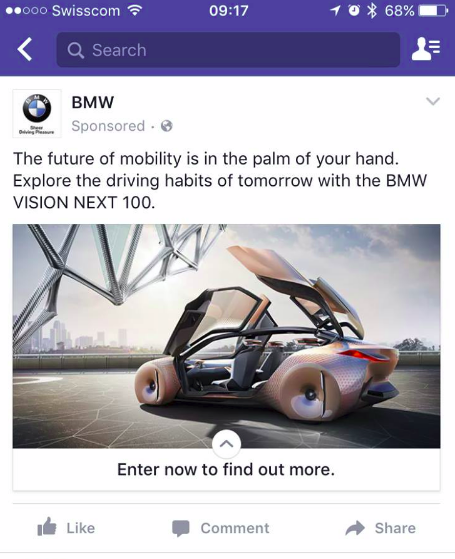
In this situation, the German car manufacturers are adding fuel to the fire by making a name for themselves with untrustworthy and/or outlandish marketing.
After initially positioning the combustion engine as the drive of choice, they are now overwhelming consumers with grandiose announcements:
Volkswagen: world’s cheapest electric car planned
VW boss: electric car to become a hallmark of the Group
Mercedes confirms electric car for 2018
Zetsche changes tack – Mercedes with electric car offensive
Electric car plans from Mercedes
BMW realigns electric car division
A different concept to the i3 and i8: New electric BMW to overtake Tesla
I could easily compile a list with 200 entries. But I’ll spare you that here. The message is always the same: look at all the cool things we’re planning and delivering. It will be ready as early as 2018 – or 2020 – or 2025. And what is already available from Tesla is always touted as new and revolutionary. Far more people now know this than the German car manufacturers are apparently aware of. The laughter in the social media is correspondingly high.
You are also welcome to read the comments in the articles. After years of being presented with study after study without any real products to follow, I don’t want to hear any more of this drivel. I finally want a product. And in the Tesla community, the mood fluctuates between “popcorn” and slightly annoyed. Chris Thoman puts it in a nutshell:
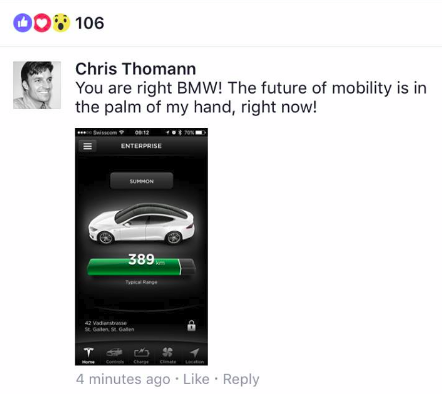
(The screenshot in the comment shows a view from the Tesla app with which you can control the car)
I’m not alone in this. I hear this from so many people, even those who have nothing at all to do with electromobility. People simply no longer believe the German manufacturers.
As if from an old world
In my opinion, the time for this kind of glossy, promise-based marketing is simply over. BMW and co. are still spending huge sums of money to push all this stuff. With all due respect, the i8 exhibitors from BMW at the larger airports in Germany are the height of ridiculousness. This car, which certainly has a certain appeal, is advertised with the claim “First of a new era”.
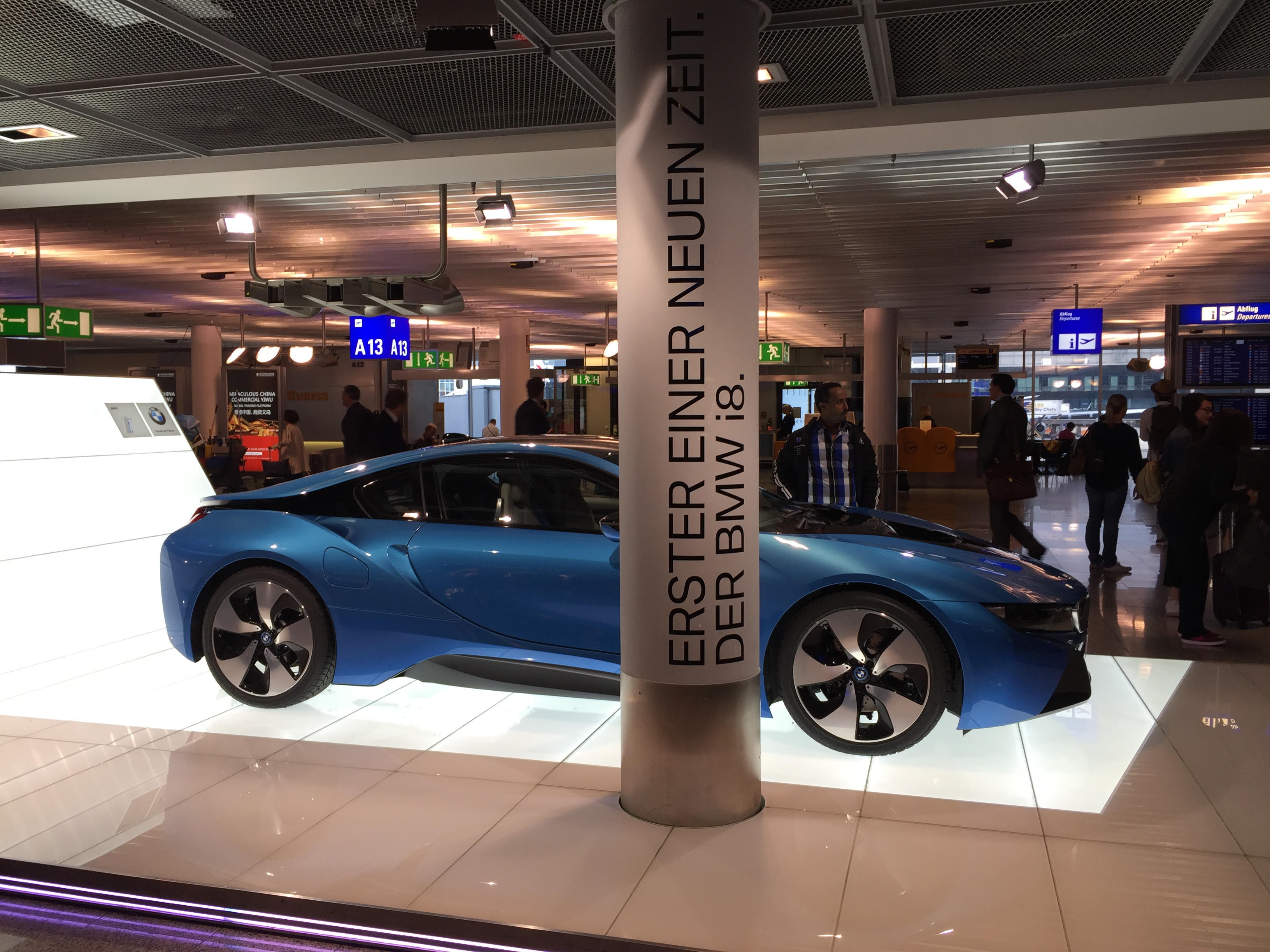
It takes a lot of chutzpah to play it like that. Because the car is a normal plug-in hybrid that can drive just over 40 kilometers purely electrically. There are plenty of models like this.
When I photographed the model’s exhaust pipe at Munich Airport a few weeks ago, an older gentleman joined me and said in a dry Bavarian way: “Well, at least they’re trying”.
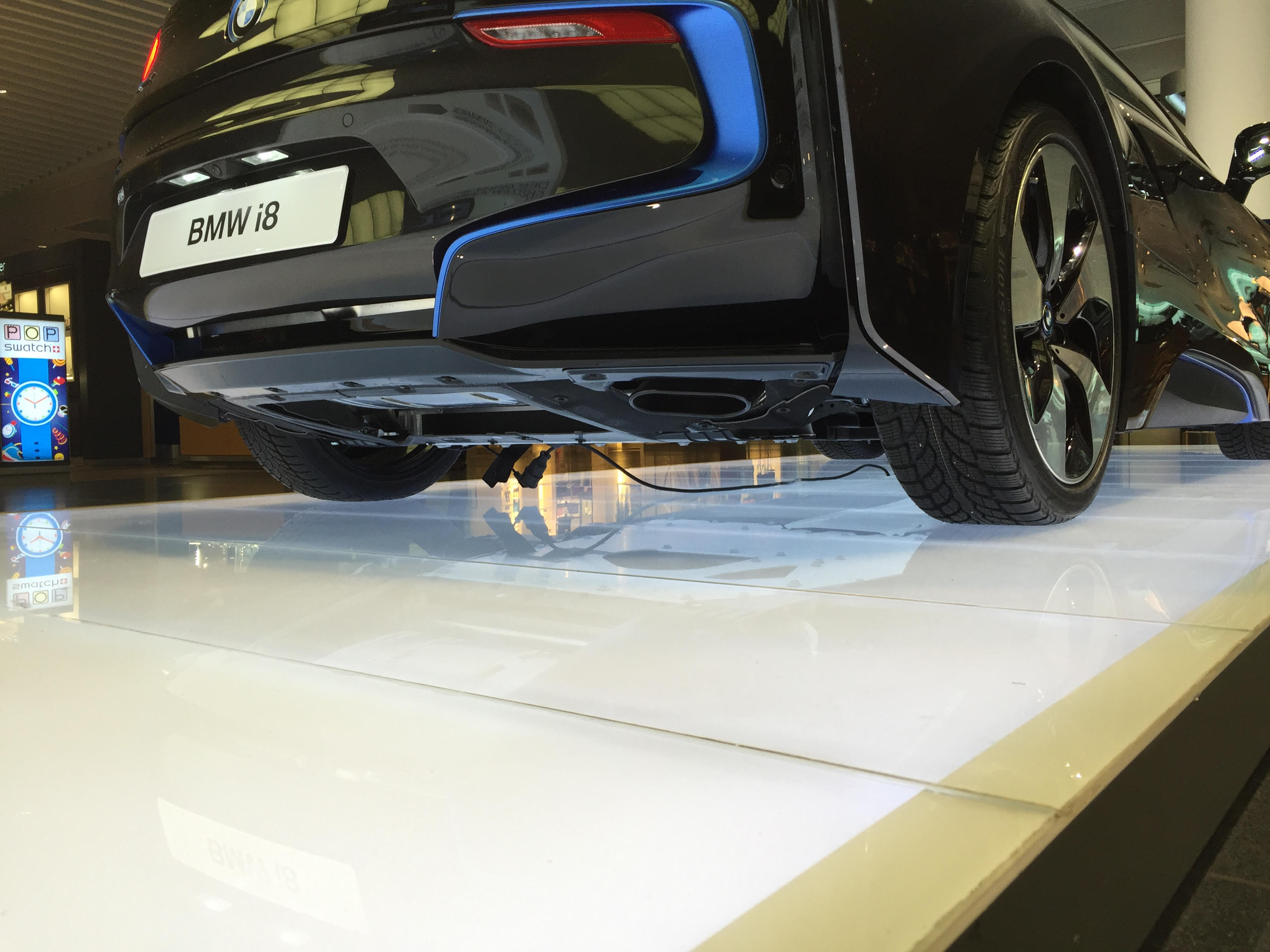
(Real satire: BMW’s electric car, the first of a new era, has an exhaust pipe).
And tells me that he was at BMW for 20 years and that it was the best you could get back then. “Today you can buy a Skoda”. (Which is also largely down to Skoda.)
Communicate deficits and actively work on them
Presenting the ideal world no longer has any place in marketing and PR today. Society has become more open and it is now well received to stand up and admit shortcomings.
That would suit the manufacturers very well, especially VW and BMW. Because by getting bogged down in ever new announcements, they are gambling away more and more of the credits they undoubtedly have with consumers.
So I’m always wondering why someone at BMW and the like doesn’t just call “stop” and put an end to all this madness. And channel the money and energy directly into a product. For example, in a 5 Series, which, temporarily, with the freely available Tesla technology, has a range of 400 km. And could be charged at the Tesla Supercharger network, which is only a contractual matter. But apparently they would rather risk the path of in-house development with a potential downfall than enter into cooperations. “NIH syndrome” is what we call it in software development.
The real winners are the silent creators
The real winners of this development are Nissan and Renault. Both have quietly and without Batmobile-like studies brought solid electric vehicles onto the market that can be bought and used today. The figures show that this marketing concept is working. The Nissan Leaf is by far the best-selling electric car in the world. The Renault Zoe leads in Germany.
The lesson learned
The lesson from this is quite banal: Communicate and market your company and your products as authentically as possible. Even if things are not so cool at the moment. This includes naming the problems and showing how you intend to do things better in the future. Where your strengths and the strengths of your products lie. There is not much better than an open and honest apology.
Then they will leave you alone and you will have time and space to work on the products. With really good products, it is very easy to do good marketing. Everything else is just “hara-kiri marketing” at the moment.
Artikel auf Social Media teilen: