The sad debate about the Swiss Energy Act.
I have actually made it a rule not to write about the relevant topics in the run-up to votes. This time I’m making an exception, because the debate on a new energy law, which is intended to give Switzerland a roadmap for savings and the use of renewable energies, could not be more disappointing. It shows a country that seems to have lost the will to renew itself and move forward. After all, such a law should not be necessary.
(Reading time: 5 minutes)
How can it be that the elephant in the china store is not mentioned?
I have followed the debate very closely over the last few weeks and listened to the various arguments. What struck me, and I find completely incomprehensible, is the fact that while everyone involved is citing “figures” and “facts”, we are not even beginning to consider the most obvious path – a fundamental transformation of the energy industry towards the decentralization of energy production and storage. One wonders whether this is deliberate or whether the protagonists really know so little about new, existing technology and development. Both, nota bene, are fatal.
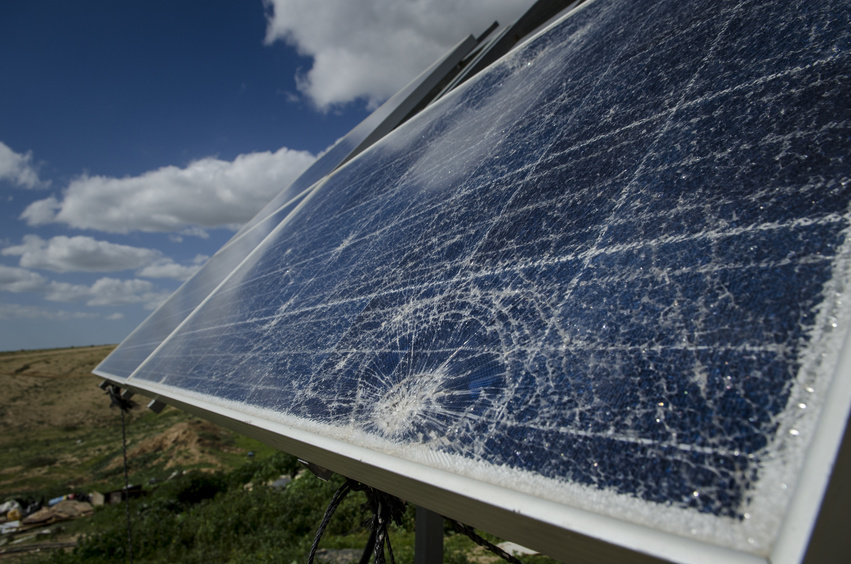
The path to this transformation leads via the home storage system. At the moment, this (still) consists of lithium-ion batteries, which are in free fall in terms of price, so to speak.
There is certainly a way, admittedly adventurous but ecologically and economically sensible, to cover most of the energy with photovoltaics if it is stored locally. What we also need is an intelligent electricity grid that can control consumers (where possible). Because at the moment it is still the other way around: consumption controls production.
Milkmaid’s bill
If Switzerland switched to electric heating and transportation, it would probably consume around 88 TWh per year. Solar cells could generate practically the same amount of electricity in Switzerland if all roofs were covered with them.
With the advent of new solar roofs, which cost no more than a conventional tiled roof, the purchase of solar cells will sooner or later become an imputed zero-sum game, as a house needs the roof anyway. In 50 years, the recommended lifespan for roofs, probably sooner, we would have photovoltaics on the entire roof area across the country. Without having to build an additional wind turbine or photovoltaic plant in the open countryside.
If we now assume an average storage price of CHF 60 per kWh over these 50 years, which is enormously high (current prices are around CHF 190 and CHF 111 per kWh for 2020), and factor in a 25% shift in utilization (without pumped storage power plants, nota bene), we arrive at a cost of CHF 0.069 per kWh.
However, we can confidently assume that prices will continue to fall sharply over the next few decades. If the storage price experiences the same decline as before (we can assume that it will fall even more sharply), electricity should be practically free in 20 years at the latest. Only the super-cheap storage systems, grid and software will need to be maintained. An intelligent grid can also be much smaller because it is intelligently utilized. We would therefore do well not to calculate with the same high costs and revenues for grids and electricity in the future as we have done up to now. As far as earnings are concerned, this has been the downfall of today’s energy industry.
The biggest economic opportunity for Switzerland in a long time
I think it is these physical conditions that make this development path economically interesting. And whatever technological direction we take, it is clear that clean energy is simply THE growth area of the next few years.
In many respects, Switzerland would be in a good position today to do pioneering work here and develop technology, software and concepts that can then be exported all over the world. With our know-how and ideal size, we could become a pioneer in this area. But it takes a minimum of courage and we seem to have lost that.
It is not relevant whether you are for or against the Energy Act 2050. You can certainly find the proposed legislation bad. But the culture of how we deal with new challenges and opportunities in this country – as the debate shows – is simply an embarrassing disaster. And it is unworthy of our history.
Where are the dreamers and visionaries in this country?
Because it seems to me that nobody in this country is really interested in opportunities anymore. Instead, everyone is afraid that it could cost them a lot. They could lose something. Where would we have got to if people with courage and great visions hadn’t led the way in the past? For example, in the construction of the rail network. Where are the Duttweilers and Eschers of our time?
Quite legal lobbying
Instead of such visionaries, we are shaped by people like Albert Rösti. As chief lobbyist for the oil and nuclear industry, he is so “biased” that he can’t help but promote the status quo. In doing so, he does his party, the SVP, no service. The arguments they have built up are based on exaggerations, deliberate omissions and scaremongering rhetoric that the SVP doesn’t really need.
Who, if not the SVP, should be interested in fewer funds flowing to the Middle East? Who, if not the SVP, should be interested in more jobs being created in this country? This is no longer about representing the voters, but only about vested interests.
It’s exactly the same game on the opposite side, so to speak, with the Left, the Netten and the Greens. Instead of focusing on the good of the people and forging compromises, they fight against each other. It is therefore with some relief that I observe new political movements such as Operation Libero, which propagates a land of opportunity. We can only hope that this classic left/right and the lobbying associated with it will soon become less and less important. And that at some point it will disappear altogether and factual issues and pragmatism will come to the fore. You can always hope.
Subsidies only make things worse
And in my opinion, subsidies are out of place in any country and in any form. They inevitably always create the wrong incentives and they prescribe technological paths where there should be no guidelines.
What would be much cleverer would be if the external costs of a technology were consistently internalized by the state as soon as they became known. In this way, the most economically AND ecologically sensible option would prevail. Examples:
We know that oil heating causes environmental damage. We can now quantify this well in economic terms. These costs should be charged to the operators of oil heating systems accordingly.
Or nuclear power plants: we now know very well what a nuclear accident would cost. Ergo, this risk should be insured and thus included in the calculation.
This means that PV and battery technology looks good at the moment. If a new technology comes along that solves this challenge better, it will automatically be cheaper. It would be worth investing right from the start. Not in order to collect any subsidies and support, but because it makes sense. Both ecologically and economically.
This would put the dogmatic adherence to certain technologies into perspective and hopefully bury them. And by that I mean all technologies. Because at the end of the day, it’s quite simple: a technology should be as cheap as possible and cause as little damage as possible. Then it’s good for the time being. Until you find out its disadvantages.
Energy law, so what…
Whether the Energy Act is adopted or not is ultimately not that important. Rösti and co. can delay new technologies, but they cannot prevent them. Sooner or later, better technologies and more economical solutions will prevail.
What became painfully clear in this debate: Switzerland has definitely lost the verve to create something new and move forward. It’s time for the preservationists, those without alternatives and the fear-mongers to be replaced. For a culture of compromise to emerge. Then perhaps the land of opportunity will be restored. Until then, as in other areas, other countries and regions will simply benefit from the opportunities.
Artikel auf Social Media teilen: