The end of the indirect sales model.
Five years ago, when I had discussions with the management of companies with indirect sales channels, it was clear that “their” retailers were extremely important and a key pillar of their business strategy. Things are different today. It is still superficially true that retailers are important, but in reality nobody believes this anymore. That’s a good thing.
(Reading time: 5 minutes)
Why is the indirect sales model disappearing?
In the vernacular, the situation is clear: everything is cheaper online. That’s why fewer and fewer people are buying from bricks-and-mortar retailers and therefore indirectly. But it’s not as simple as that. Rather, there are various factors that are leading to the disappearance of the indirect sales model. The easiest way to explain this is to shed light on the points that have justified indirect sales to date:
Information transfer
One of the main tasks of the retail trade was to provide information. As a rule, the salesperson was very well informed about the products and could make valuable product recommendations. And had to do so. Because no customer was familiar with the details of the products.
Today, end customers are generally very well informed. This is particularly true for complex and higher-priced products. As a result, today’s salespeople are often embarrassed because customers simply know more. The complexity of this knowledge has also increased.
The bottom line is that this generates higher expectations on the part of end customers. As a rule, this can only be systematically disappointed. Quite simply because the sales staff would have to build up a great deal of detailed knowledge across the product range.
That’s why we hear from so many disappointed customers of brick-and-mortar retailers. Their expectations are simply too high. And, it has to be said, the sales staff usually behave quite childishly. Instead of clearly communicating this in a situation where it is obvious that they don’t have much of a clue and helping the customer anyway, most of them insist on their statements or say nothing more. This increases the frustration factor immensely.
In the last 5 years, I’ve heard a salesperson say maybe twice that they don’t know and that we can look together at how we can solve the problem. I had one such conversation with a Hornbach salesman. Although he knew as much about floor tiles as I did (and that, dear readers, is saying something), we were able to choose the right product together.
Distribution function
Another important function of the indirect channel was the distribution of goods. Usually there was and is a manufacturer, then a distributor (or its own country representative) who imports the goods into a country and then there is the retailer who offers the goods for sale nationwide.
This was necessary because it was extremely time-consuming to move goods. It was logistically unthinkable for the manufacturer to deliver directly to the end customer. The infrastructure was simply lacking.
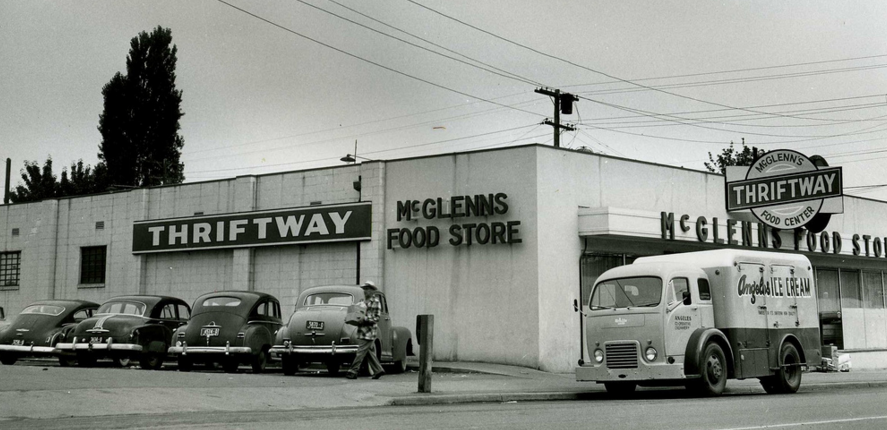
Today this is different. It is easily and economically possible to send parcels directly to end customers in other countries. This development is mainly driven by IT-supported logistics. The new technology has created completely different planning and delivery horizons. This makes the middleman to a large extent logistically obsolete.
The development of the logistics infrastructure is still underway. We can assume that new logistics routes will be created in the medium term. We can also assume that the use of 3D technology will mean that far fewer goods will need to be moved in the long term.
The local retailer’s task of having to distribute these goods granularly is therefore increasingly disappearing. Distributors or national companies only very rarely have a raison d’être from a logistical perspective. However, large brands in particular usually continue to operate them and skim off the corresponding profits in the retail chain.
In Switzerland, this means that shower gels and shampoos, for example, are much more expensive than abroad. Manufacturers are still usually able to legally prevent parallel imports from bringing goods onto the market at lower prices. But it is only a matter of time before the intermediate trade without a real value-add will disappear (example here – in polemic Swiss High German).
Local marketing
Another important role of the intermediate trade was marketing and advertising. In smaller communities, it was usually the only way to actually reach customers. Manufacturers supported dealers and these dealers usually knew exactly which advertising measures were effective locally.
Today, advertising is usually controlled quite centrally. A lot happens online. It is usually not very difficult for manufacturers to reach end customers.
Try-before-you-buy
Of course, it was and is good for customers when goods can be physically inspected before purchase. Having something in your hand is still incomparable.
In the past, this was not a consciously unique selling point for retailers. Today, that has changed. It is one of the retailers’ greatest strengths. This is one of the reasons why many manufacturers rely on flagship stores in large cities to bring their products closer to customers and to be able to control the CX themselves.
The end of bricks-and-mortar retail?
It is an absurdity that the end of bricks-and-mortar retail is always being discussed. Because no, it’s not there yet. With the emphasis on yet.
Because of the 4 roles mentioned above, 3 of them are now obsolete. As soon as it will be possible to inspect a product with as little effort as today (driving to the store), that will be it. Until then, however, there will probably be quite a battle.
Reinventing retail
I find it all the more astonishing that there are no truly innovative retail concepts. If Duttweiler were to design a store on the white sheet today, would it look like a store today? Hardly.
I therefore assume that we will very likely see a retail start-up in the medium term. A company that cleverly combines the best of online and offline solutions to make shopping much easier. At the moment, this is still incredibly capital-intensive. But make no mistake. It’s getting cheaper by the day.
Hybrid Indirect – Multiples Direct
As a manufacturer, I would stop relying on middlemen. Not immediately, of course, but strategically. In concrete terms, this means starting to sell directly. For example, online or by opening your own stores. The most important thing in this context is customer data. If you have access to this as a manufacturer, things are much easier.
Either way, the classic indirect sales model will fall by the wayside. New models decouple the billing, distribution and marketing channels. The classic specialist and authorized dealer has thus had its day. They will be replaced by new players who make better use of the opportunities and ultimately achieve more with less.
Artikel auf Social Media teilen: