
OroCommerce – The next big thing in eCommerce?
They still exist, the black holes on the map of software products. Applications for which there is demand but no good, simple solutions. One such black hole is B2B commerce. Although there are solutions in the proprietary sector that are aimed at this sub-market, for various reasons none have yet established themselves. OroCommerce has set its sights on nothing less than conquering this market and the chances are good. The first alpha version was released yesterday. An assessment of the situation.
(Reading time 4 minutes)
Prominent fathers
I think Oro Inc. needs no further explanation. The Oro platform and OroCRM as the first product are used in many projects and are growing strongly. OroCommerce is a new addition to the family. A family with prominent parents: We know Yoav Kutner, Jary Carter, Dima Soroka and Roy Rubin from Magento. I summarized background information and assessments of OroCommerce in this article in April.

A few OroCommerce Alpha highlights
B2B role concept aka “master-slave user configuration”
A really traditional B2B painpoint: One or more customer groups should be able to contain different companies. The companies have different users, some of whom should be able to create new users independently and view special rights such as discount price lists (master), while other users should only be able to prepare orders, for example, or view products (slave). 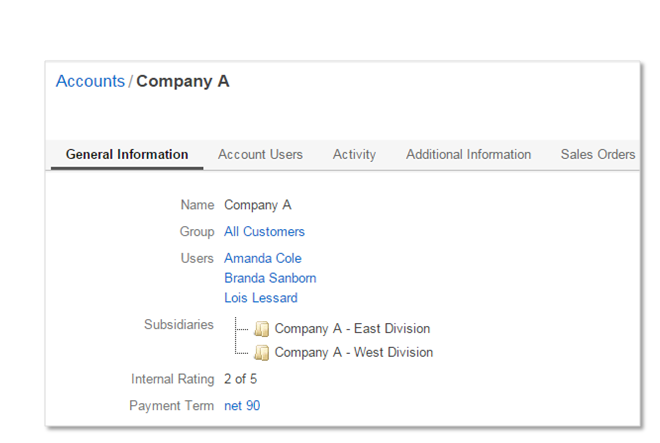
I have come across this requirement in dozens of B2B projects in recent years and no system can really solve it in a simple and modular way. Some kind of customization is usually necessary. OroCommerce solves this consistently and elegantly. It is also possible to map multiple locations. Another thing that used to be rather tedious.
B2B Shopping Frontend
Even though more and more influences from B2C eCommerce are finding their way into the B2B sector, “procurement shopping” is still fundamentally different. In the OroCommerce demo, we see a clean, simple front-end integration.
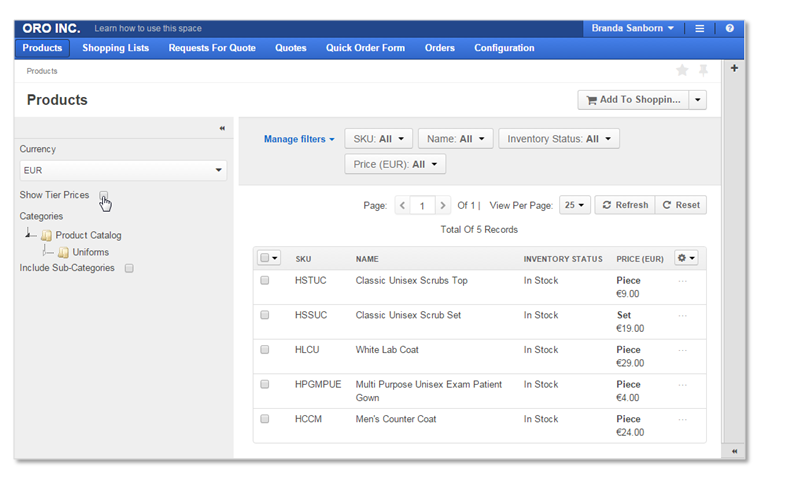 Features such as tree-based navigation, simple filters and the ability to add several items
 to the shopping list at once typically make the purchase manager’s work easier, and yes, dear marketing people, the inclined integrator can certainly restyle it so that you find it “sexy”.
B2B order workflow
À propos shopping list: Logically, the classic add to cart does not exist in OroCommerce. Items are added to a shopping list and these can be managed and transferred to an order. 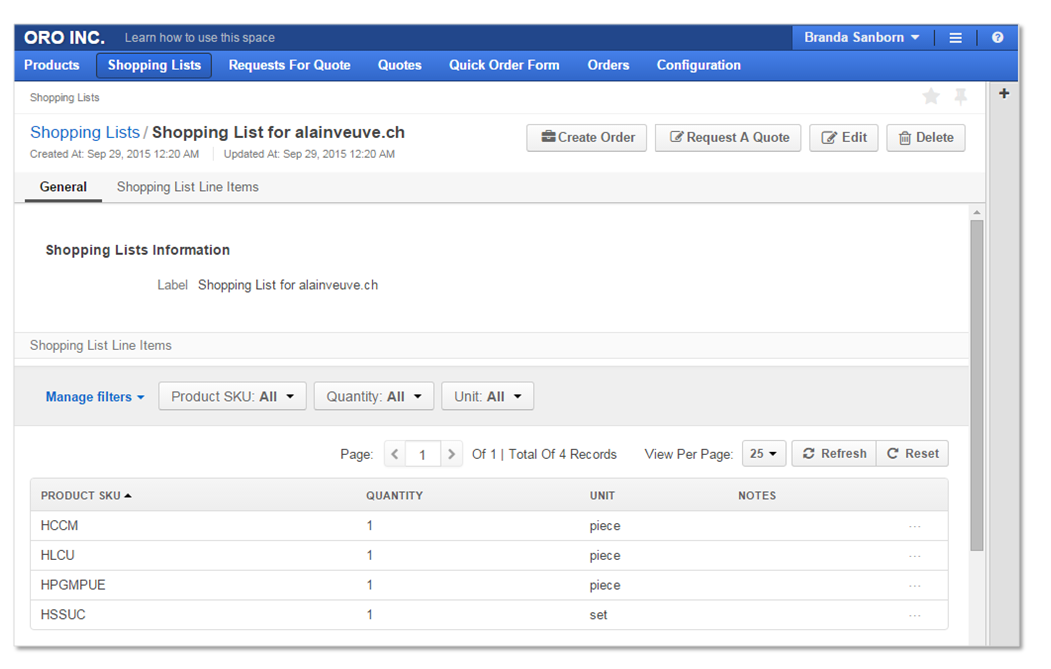
This solves a whole range of typical B2B shopping scenarios in which orders usually have to go through all kinds of workflows, approvals and verifications. OroCommerce has all the recipes you need to implement even complex B2B requirements.
Good demo available
The format of one article is not sufficient to do justice to OroCommerce in its entirety. I have therefore only picked up on 3 important points. I can only encourage everyone to spend an hour with the OroCommerce demo. It is really good and has preconfigured roles that you can select directly.
B2B is not an untapped market
When testing OroCommerce over the last few days, I sometimes had similar feelings to when I tried Magento for the first time. There is this mixture of functionality that you have been waiting for a long time and the knowledge that it is all open source. Although, and this is as certain as the sunrise, there will also be an enterprise version, the majority of the many SMEs now have a tool at their fingertips for the first time that enables them to do B2B eCommerce in one fell swoop. And in a functional league that is on a par with many large providers. This is the core of this disruption, which was already the case with Magento. It has enabled SMEs to catch up.
OroCommerce will turn the eCommerce market upside down. The big question is: to whose detriment?
One consequence of this development will be that large companies will also gradually come to terms with OroCommerce. These are precisely the companies that have so far relied on Hybris and the like. While Magento can hardly keep up with Hybris, for example, in terms of functionality in the B2B sector, but is still usually the better choice on balance, it has triggered a true revolution in B2C.
This has already been at the expense of Hybris. Only thanks to a booming market could (will) all of them still grow. However, OroCommerce is aimed precisely at this core USP of these legacy manufacturers. For them, the Magento disaster could now simply repeat itself with OroCommerce. Paradoxically, with the same key players at the helm. The fact that the traditional manufacturers are not rising to the barricades and doing something radical about it is, as I said, due to the fact that the cake is big enough for everyone.
And Magento?
Magento will probably lose a few B2B projects. On the one hand, this is bearable. On the other hand, I am convinced that Magento would much rather lose B2B projects to the open source product OroCommerce than to Hybris. This is basically a good thing for Magento: once a company has paved the way in terms of open source, other open source solutions are usually also adopted. From this perspective, OroCommerce and Magento open the door for the other solution, because the number of companies that operate B2C and B2B in parallel is considerable in retail.
The next few months will therefore be very exciting for eCommerce, especially in Europe. The chances that the disruption that Yoav and Co. are aiming for will succeed are very high.
Artikel auf Social Media teilen: