Digitalization: Preaching disruption – living innovation.
Disruption seems to be a kind of magic word. Almost all decision-makers are afraid of external disruption of their industry, their brand, their business. Or want to bring disruption to the market with their companies. And the term is currently being used excessively. The best thing I’ve heard in the last two months is “innovative disruption”. The vast majority of people simply don’t seem to have a clue what disruption is, what innovation is and what the difference is.
(Reading time: 4 minutes)
Something like Uber or something
When I asked a colleague from a renowned management consultancy five weeks ago what disruption actually means in the context of digitalization, the answer was a lukewarm “Um, something like Uber or something”.
So when I gave a talk on this topic at T3CON in Munich at the end of October, I didn’t expect much from it. The title of the talk “How reasoning by analogy will lead you into insanely wrong directions” was not exactly predestined to be a hit either. Too technical, too academic. So I was all the more surprised that the house was full, so to speak.
In one part of the presentation, I dealt with precisely this topic: What is innovation? What is disruption? The slides are partly from this presentation. Unfortunately, there is no video recording of the presentation.
Why are Apple, Google and Tesla successful?
You can ask anyone exactly this question and you will usually get something similar in response: “Because they are innovative and develop new technology”.
I maintain that neither is true. Most of the technology has not been developed by these companies (research level) and these companies are not innovative in the sense in which we use the term every day.(But in the sense that Wikipedia defines it)
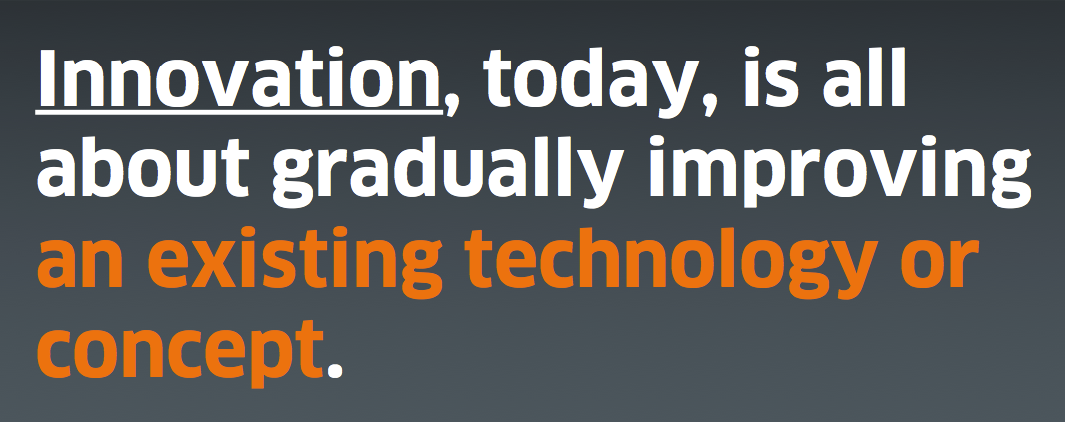
When we talk about innovative companies today, we mean those that invest a lot of money in R&D and further develop their products. It is usually about improving existing products. They rarely change their business model. So rarely that I can’t think of an example right now.
The analogy
The reason for this is very simple. We are extremely reluctant to break out of what we already have. The more we already have, the more we concentrate on protecting these possessions rather than tackling something new. This is just as true for a small child as it is for the CEO of an international corporation.
The more we focus on what already exists, the more we fall prey to so-called analogies. And we begin to build our justifications on these analogies.
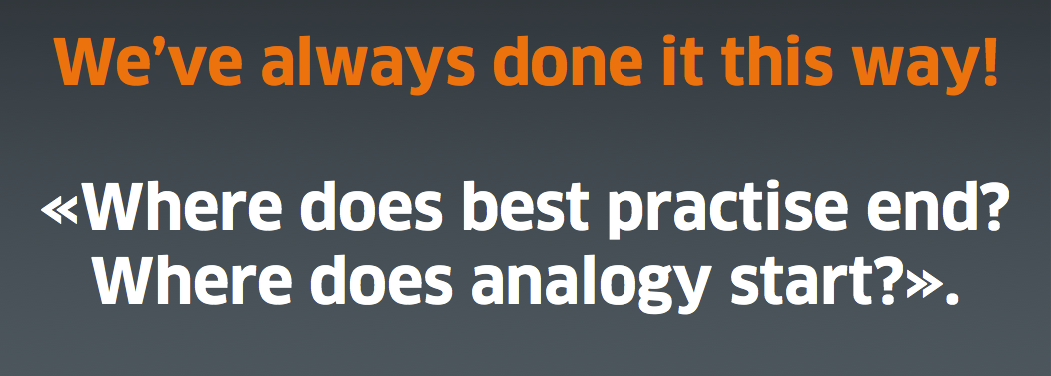
On the one hand, this is bad when it comes to creating something really new. On the other hand, we also benefit from experience that has been generated in the past. The difficult thing is to distinguish where the so-called “best practice” ends and this inhibiting analogy thinking begins.
In my experience, the more people are involved in such issues, the more analogy-based justifications prevail. Even the best facts cannot usually persuade a large group to do something new or leave something existing. Groups can develop an incredible momentum of their own and sweep facts under the carpet.
This effect reinforces the justification by analogy.
The different questions
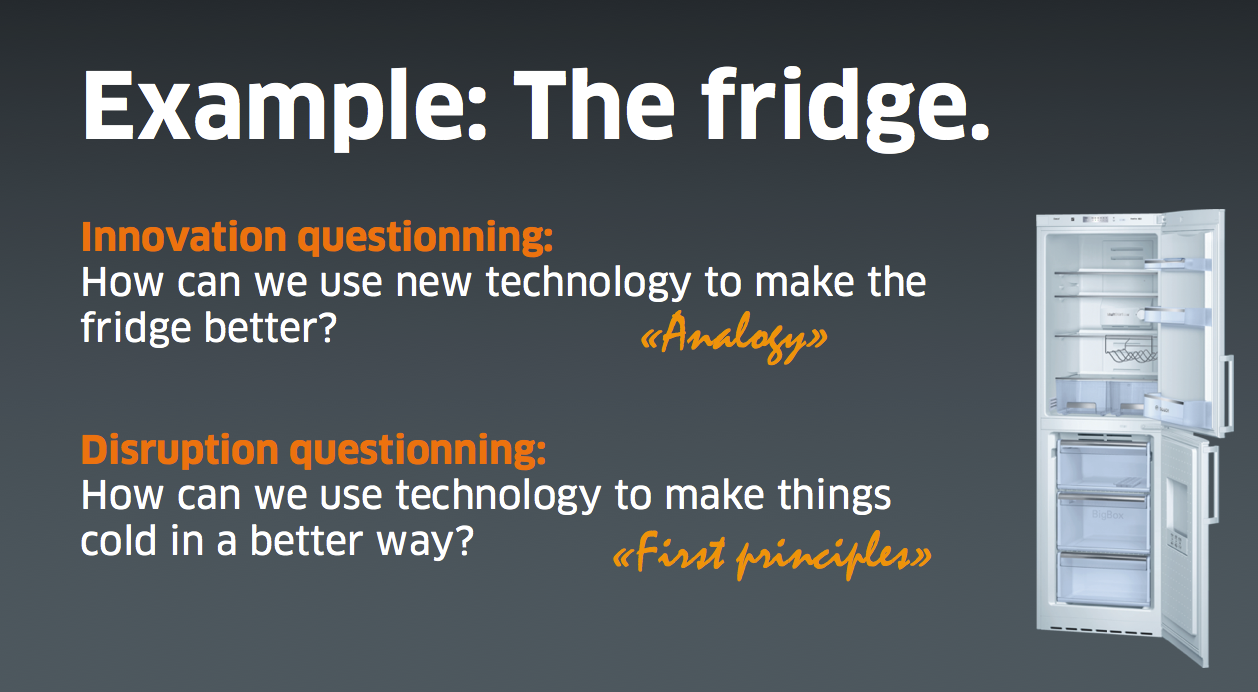
This small example is a good illustration of how so-called innovative players use new technology. Imagine you are a decision-maker at a refrigerator manufacturer and your team has access to a new technology that greatly simplifies the cooling of objects.
What is the question you are asking yourself about this new technology? Better refrigerators? Or perhaps a completely new product that better fulfills people’s need for “refrigerated items”?
How you answer this question and what you do is determined by your risk aversion.
Risk decides
If you decide to further develop existing products, you are usually afraid of the risk.
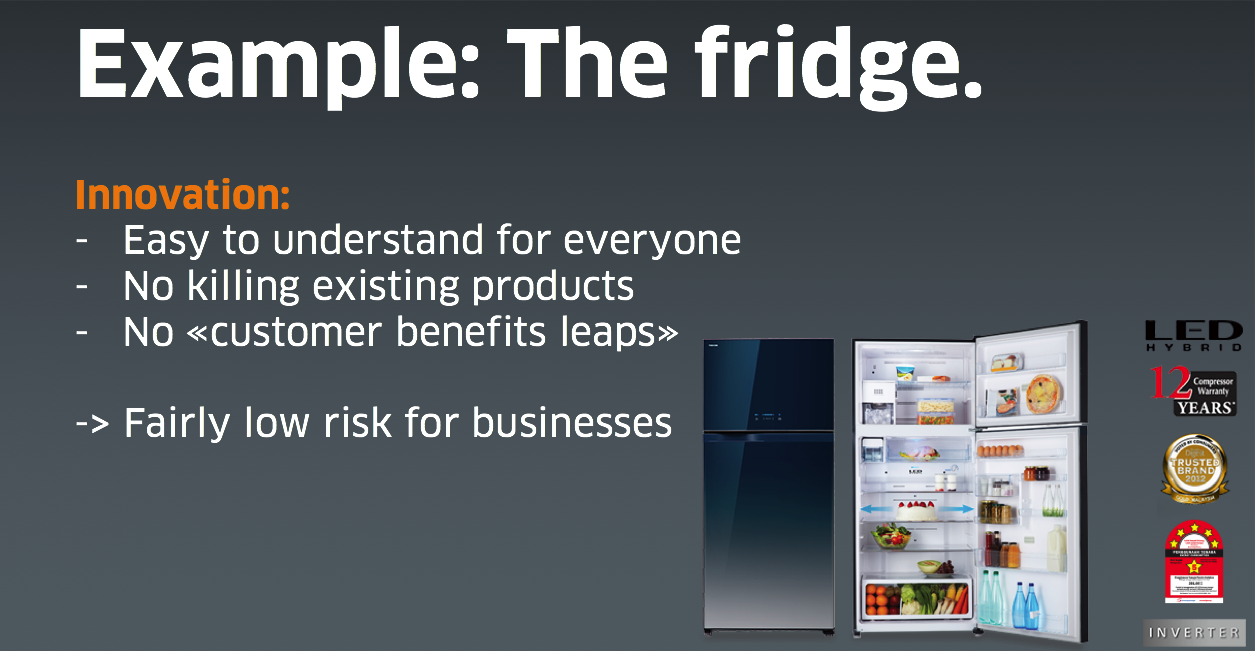
Because advanced products are easy for everyone to understand: The same as before. Simply better. As a company, you jeopardize your existing business less and have relatively little business risk.
It’s completely different if you decide to develop a completely new product with the technology:
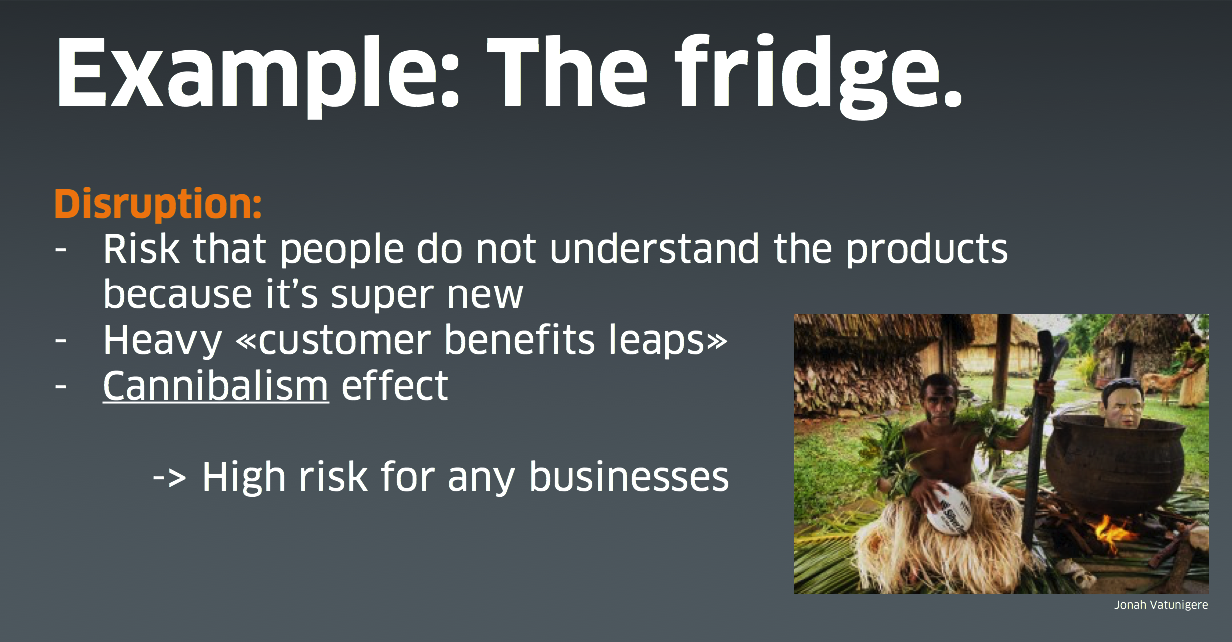
The biggest risk, apart from product development risks, is that your customers do not understand the new product. It’s almost impossible to test. And I don’t think it’s super relevant either. If you know exactly what your customers’ problems are, it’s enough to have a product that solves these problems much more easily than any other product. I call this the “Customer Benefits Leap”.
This must be huge. The customer must understand almost immediately that the new product is fundamentally better. Not 10% better than everything available, but 1000% better.
As a company, the cannibalization effect should also not be underestimated. Imagine if Apple had sold conventional phones before the iPhone and had been economically dependent on them. Better still. Imagine Apple had developed something that was 1000% better than the iPhone. Difficult to launch something like that and not lose.
It’s all about the paradigm shift
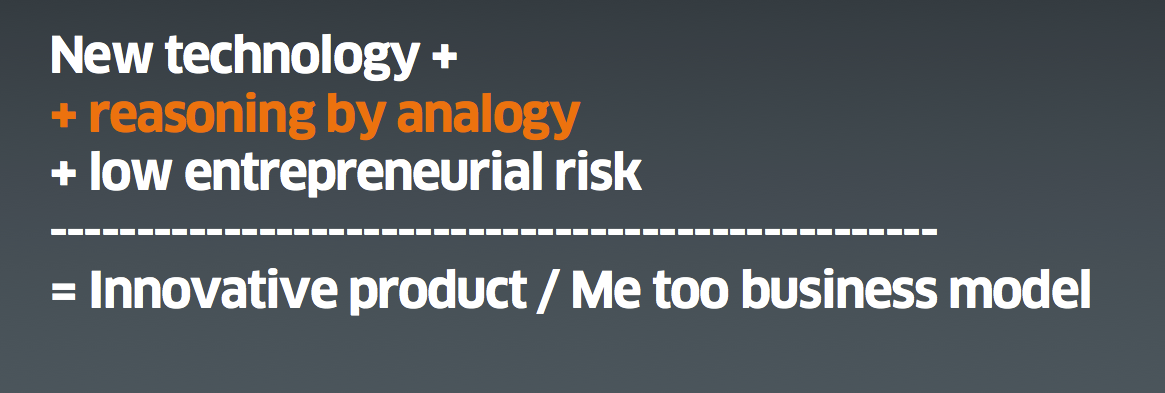
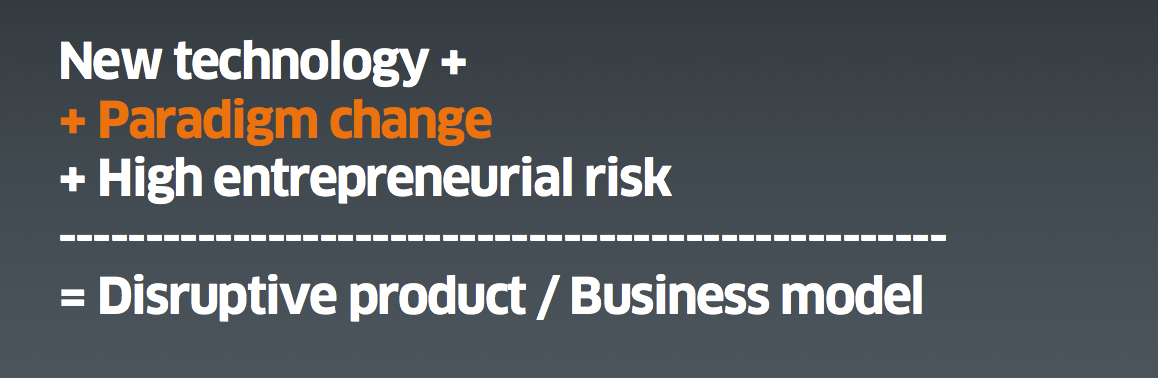
While innovation-driven process models in product development generally ensure the continuous further development of the company, disruption-driven process models offer the potential for major successes – or failures.
The following simplified and standardized principles apply:
And for the disruptive approach:
As always, the exception proves the rule.
Preaching disruption
As I mentioned, what I often see is that decision-makers and entrepreneurs would like to be really disruptive, but opt for an innovation-driven pace for various, often very logical and sensible reasons. However, I think it’s a shame that there are so many managers who are still hoping to hit the big jackpot. A jackpot that is only possible with a disruptive approach. And even then only with luck. And above all, a lot of commitment.
Artikel auf Social Media teilen: