Rely on display-to-display propaganda with Service & Support!
You know the situation: a company has good offers or products, does great advertising and delivers quickly. So you buy from them. After a few days or months, a problem arises with the product and you need help. What you then experience fundamentally changes your perception and attitude towards the company and the product in 95% of all cases. Either in a positive or negative way. As a consumer, you are fully aware of this. However, most companies obviously have no idea about this because they regard and treat service & support as a cost factor. And in doing so, they give away the most effective tools for image cultivation and advertising.
(Reading time: 4 minutes)
Customer Experience
Most people simply have no idea about customer experience. Unfortunately, this is especially true in the digital sector. The term is often confused with user experience. Reduced to the product or then totally misguided, transposed to the often outdated marketing measures. But it’s actually quite simple.
The customer experience is the sum of all experiences that the customer has when interacting with a company. From the first encounter with the company to the last second in which they use its product. Sometimes even beyond that. For example with recycling offers.
It is difficult to consciously design something like this consistently while remaining within the business corset. It is also made downright impossible by the silo culture that prevails in conventional companies. A degenerate controlling and reporting culture usually systematically creates the wrong incentives and thus systematically prevents doing what is good for the customer. However, since this is exactly what it is all about, many companies are no longer doing as well as they did during the period of saturation growth. Digital and technological progress is usually just a kind of fire accelerator. We don’t even need to talk about disruptive new business models that “threaten” such companies.
Support as a cost factor
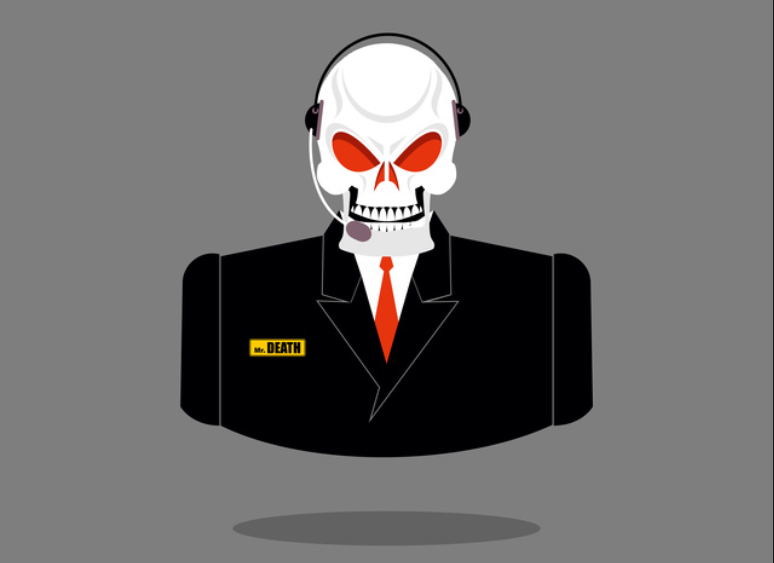
And so support is seen as a cost factor. A kind of necessary evil like taxes, for example. And just as with taxes, attempts are made to outsource this support and reduce costs. Using methods that sometimes seem adventurous in a negative way.
I can confidently spare you the experiences with catastrophic support. I know you’ve all had them too. You know exactly what I mean. Just go through it mentally at this point.
Differentiating feature No. 1
What these companies don’t understand is that service & support is by far the best and most cost-effective way of advertising, image and customer care. By far.
Because it’s quite simple: the better you help a customer with a problem, the better their attitude towards your company will be. And, here’s the kicker, because the general level of support is so abysmal, they don’t actually have to be that great.
“The customer doesn’t expect that no mistakes will happen. They just expect you to rectify errors constructively and not make a fool of yourself in the process.
”
Because when the customer visits your support website or calls you, they do so with the expectation that “now I have to annoy them again”. Information is not available, processes are all over the place with numbers and whatnot and it will take an endless amount of time before the customer gets their turn.
If you design your support in such a way that this typical expectation is refuted, you have already won in many cases.
Display to Display Propaganda
You know what happens next: customers gain trust in your company. More trust leads to more purchases and, above all, to your product being recommended to others. You know those phrases – one colleague to another: “Maybe you pay a bit more at [company XY], but if you ever have a problem, they’ll help you too.”
This is the killer customer support that sets really good companies apart from mediocre ones. Mentally go through the list of companies that you think are really good. I bet you: 99% of these companies offer really good service & support.
This effect used to be called word-of-mouth propaganda. Today, I call it display-to-display propaganda because we communicate much more via displays. The greatly expanded networking circles multiply this effect. This happens on Facebook, in forums and in messengers. Especially in forums, recommendations are invaluable.
Because when we research products (before making a purchase decision), personal, private testimonials usually weigh more heavily than those from blogs or even commercial journalistic offerings.
Our small margin does not allow for really good support
I hear this phrase quite often when I discuss the topic with colleagues. With all due respect, that’s nonsense. It may be that the current way of thinking and structure does not allow for more support. It’s a kind of coherent logic, but it’s wrong as a whole.
Because just make support part of the marketing budget. And stop with the kind of dinosaur advertising that you can’t really control: Snoozy ads in print media, mediocre TV ads, basically all the ones average companies can afford, trade show booths with no real sales concept, etc. – the list is long.
As simple and convenient as possible
And then invest the money you save in redesigning your service and support. Make sure that you do what the customer wants. In most cases, this is not just a rock-star telephone hotline, but a balanced concept that also includes self-service elements.
And automate radically. Just not to the detriment of the customer, please. You can do that quite well. Especially in downstream processes. And that also reduces costs.
Artikel auf Social Media teilen: