Peace on earth – and a product for people!
Don’t worry, this won’t be a typical “the real Christmas” article. Not a call for more modesty or more inner peace. Nor a call for more charity. No. Even though I’m not a fan of Christmas, I advise everyone to celebrate as much as they can. And for heaven’s sake: Store properly.
XMas for the Win
This article here has a marginal connection to religion and therefore to Christmas. The reason why I am writing it today has a lot to do with the fact that I have only just found the time this morning and, I have to admit, that I have heard the phrase “Peace on earth – and good will to men” again in the last few days and I wondered what exactly is, or would be, good will to men today.
Theologians among you will probably beat me over the head with their reasoning and would like to enlighten me that peace means the peace of people towards God and the good pleasure means the symbolized grace of God for people. However, this is just one interpretation of many and, as is so often the case, people on the street understand everything differently and more directly anyway. That should not concern me or you today.
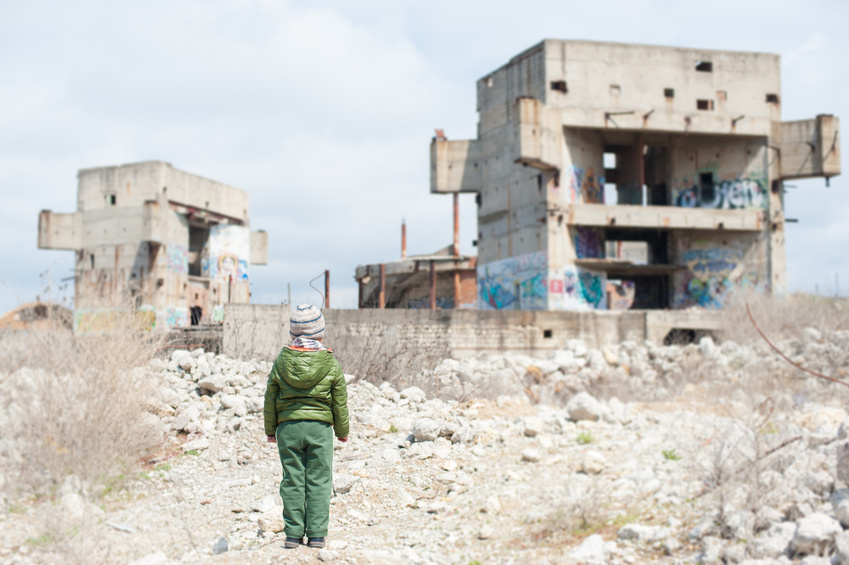
When one of my sons asked me in the summer whether there would ever be another war, I was actually quite quick to answer that I thought it was very unlikely. All the data shows that we have developed well in this area. Even if the turbulence of a political nature is at times almost unsurpassable in terms of grotesqueness, there are surprisingly few signs that catastrophic conflicts will increase again in the population as a whole. This does not mean that it has to stay that way.
And please don’t let that distract us from the fact that terrible armed conflicts with hundreds of deaths are constantly taking place. Until every last person understands that we are all united on this planet, it will stay that way.
But still… We know surprisingly little about how armed conflicts ultimately arise and we do very little to shed light on this. There is indeed the field of peace research. But this is largely concerned with the effects of wars or their basic motivation. There is practically no systematic, rational research into peace.
What has amazed me the most in the last 15 years is that we are not even aware of the simplest findings, let alone that they lead to a change in behavior:
Violence does not work
Trying to solve problems by force does not work. This approach always, absolutely always, only produces losers. I can bash my opponent’s head in and make him harmless for me. But the probability that this approach will backfire on me or my immediate environment is almost 100%.
The situation is very similar with military defense. I can try to defend a country, but the damage caused to the population is greater than if the country had surrendered militarily. This is because as soon as weapons are involved, the damage on all sides increases immeasurably.
Moreover, and this is really crazy, there are no examples where a war has really solved a conflict in the long term. It is much more the case that after a certain amount of time at war, one or the other party, or often both parties, become weary of the warlike actions and end up dealing with the damage. The emotional damage lasts for generations and is therefore inherently present even across generations.
We spend huge sums on war equipment and organization and call it a success if we don’t have to use it. But we don’t invest a cent in new, better options for conflict resolution.
Only those who do not know war consider war
I have never met anyone who has been to war and describes war as something honorable or worthwhile. My wife’s grandfather, who was heavily involved in the Second World War, used to say: “Anyone who is proud of war is guaranteed never to have been to war.”
What worries me is that the vast majority of people have no idea what war feels like. That’s dangerous, because you can lure such people in with promises of war. My grandfathers’ generation would never have gone to war. The subjective comparison between old Germans and old Swiss men is also interesting. While the Swiss men were proud of their achievements in the war – but had never been involved in any hostilities (I would have risked being slapped down by my grandfather for this statement), the German war veterans I had the pleasure of meeting were very reluctant to talk about the war. It was also completely unimaginable that just one of them would have gone to war again.
“Peace is like a functioning computer system. We hardly notice it and don’t appreciate it until it breaks.
”
My children learn a lot at school. We learn all kinds of nonsense. For example, how the songbirds of the region were named. But we learn nothing about how conflicts arise and what war really means. We don’t have “peace” as a subject – even though peace is the basis on which all social achievements are built. Why not? It is the closest thing. That is paradoxical.
We do not “engineer” peace.
The solution to the problem is, I believe, much simpler than many people think. It’s just impossible with the historical mindset that we still carry around with us. The possibilities for establishing peace on a global scale are constantly expanding. If you’re thinking to yourself, “Yay, how naive”, think again. Why do you associate ambitious plans for peace efforts with naivety? Isn’t this thinking part of a “historical mindset”?
Especially at Christmas time, many people are once again denouncing the “substitute religion of consumption”. I think that falls short of the mark.
The world has become rapidly commercialized over the last 200 years. Everyone is thinking more and more economically. In our private lives as well as in business. I believe this development is a powerful “peace driver”. If we increasingly only do what is profitable, then we will use less violence because it is simply not worth it.
War is big business
I am a big fan of “misusing” business to achieve idealistic goals. We are seeing this effect more and more often: Super-rich people like Bill Gates spend the money they have made on solving social problems. Others, like Elon Musk, aggregate as much money as possible to fly to Mars. Whether they think it is worthwhile to save children or to have people on Mars is not so important. Because these are undoubtedly things that benefit humanity. Business must have a greater purpose.
So the era of “Ackermann capitalism” seems to be followed by an era of “good deeds capitalism”. And we are internalizing more and more negative effects into the economic model. This development has arrived in environmental protection, where more and more polluters are being forced to reflect the entire costs of their actions in their products. It is only logical that sooner or later this will also happen with negative social effects. The concept of an “unconditional basic income” is to a certain extent a first, albeit still immature, approach in precisely this direction.
“So if war is big business, why can’t peace also be big business?”
Most people on the planet desperately want peace. That should be worth something to everyone. The willingness to pay for peace is generally higher than the willingness to pay for war. To me, that looks like an incredibly large, interesting market.
The exciting thing is that we already have the spending figures: Global spending on the military amounted to USD 1,739 trillion in 2017.
If this money were distributed to everyone in the world, it would amount to around USD 200 per person per year. That is an incredible amount of money. Especially when you consider that a significant proportion of people have to get by on less than USD 500 per year.
Would you do it?
If someone were to come along and offer you a deal: you get USD 200 cash in your hand in return for a commitment not to directly or indirectly support any acts of war? Would you do it? The vast majority would. Big enough to control renegades economically.
Too radical? Okay. I’m with you. Such a change in thinking is difficult to achieve. But probably not impossible. As the saying goes: everything is impossible until you do it.
But let’s remain more moderate for the moment: what if we paid everything we currently pay for warlike activities and then paid again for no longer pursuing precisely these activities? In other words, we would tell the soldier that from now on we will pay you not to engage in any warlike activities. Wouldn’t that tend to ensure more peace than the other way around?
Our peace efforts are subject to old thinking
The efforts for peace, the many aid organizations, all operate within the mental framework that we must take military and political options as given and immovable. This is fundamentally wrong. Instead of dealing with the rational solution to the problem, we cherish and nurture the circumstances that make the problem so unpredictable in the first place. All in good conscience and with an absolutely noble background. And I appreciate everyone who tries to help people. But perhaps, as crazy as it sounds right now, peace as a product that can be consumed is more accessible to humanity in our era than anything else.
Artikel auf Social Media teilen: