
Electromobility: as blue as the blues.
Almost all established car manufacturers now have electric cars on offer. However, the range still means that studies and concepts are presented, but only a small number of production-ready vehicles are on the roads. Interested parties have long been asking whether the established manufacturers are unwilling or unable to sell electric cars.
Design, design, design
It is well known that you can argue long and hard about design. Less so about logic. Even if it’s fashionable again at the moment. If I wanted to sell an electric car, it would be logical to design it in such a way that as many people as possible would like it. Or if I already have cars in my range that many people like, to use the same design.
Unfortunately, this is not the case with the established manufacturers. Somehow, it seems, the color blue has become a fool’s errand. Blue seems to be the color of electricity and electric cars par excellence. As a normal consumer, you rub your eyes: Why is that?
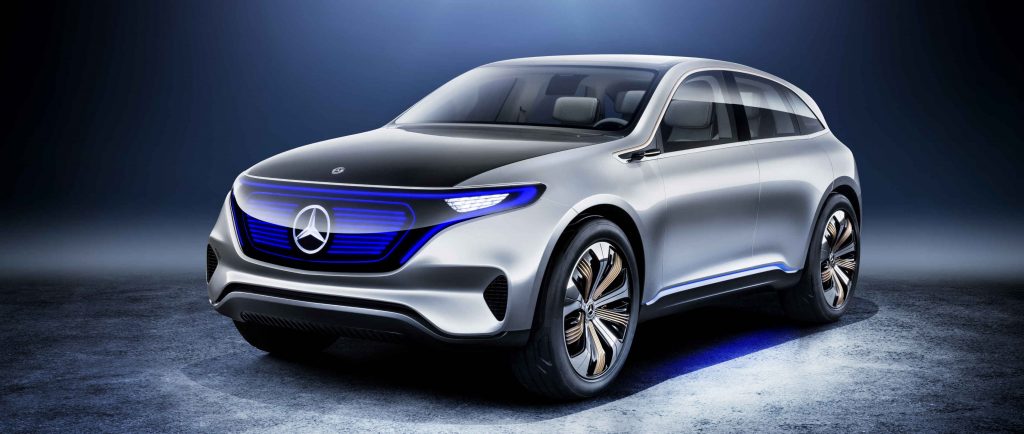
Many of these cars look like they’ve come straight out of a science fiction movie. There is a blue glow at the rear, on the side and/or on the apron. The design of many of these cars looks so “spaced out” that it’s hard to imagine how a former BMW 5 Series or E-Class driver could suddenly put one of these in their garage.
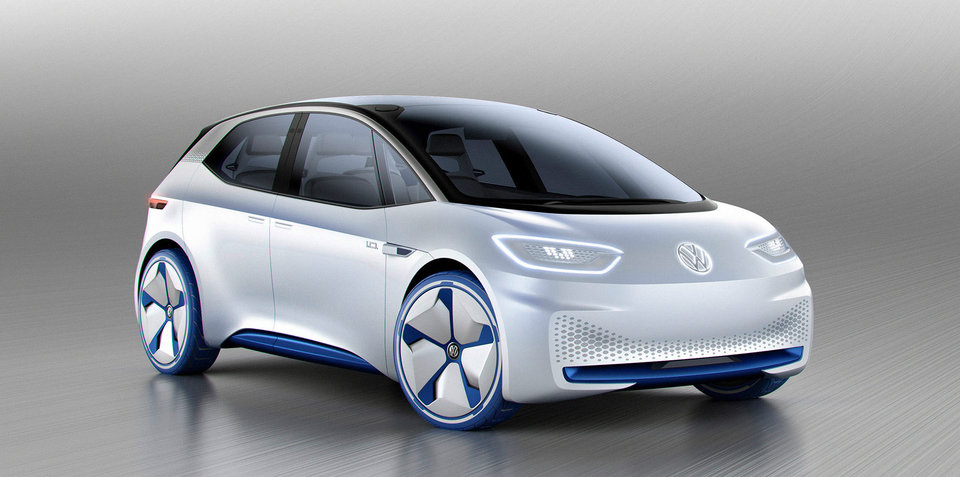
The question many people are asking is simply: why? Supporters of electromobility see this as further proof that the established manufacturers do not want to sell electric cars at all. They argue that they are simply so heavily invested in combustion engine technology that they cannot afford to write off these investments and invest massively in electromobility at the same time. So they build a few cars to soothe their conscience and make them so “unsellable” on the outside that they can later say that there is no demand for electric cars.
Own sub-brand?
To date, nobody has been able to give me a clear answer to the question about the special designs. Not even from the manufacturers. In addition, the creation of sub-brands for electric cars, as Daimler is doing or wants to do with EQ, BMW with i and VW with ID, seems absurd to me from an entrepreneurial point of view. You have the best brands in the world, the best-known product lines and, in addition to all the investments in the new technology, you also have the expense of making the whole thing more expensive and complicated with a new brand.
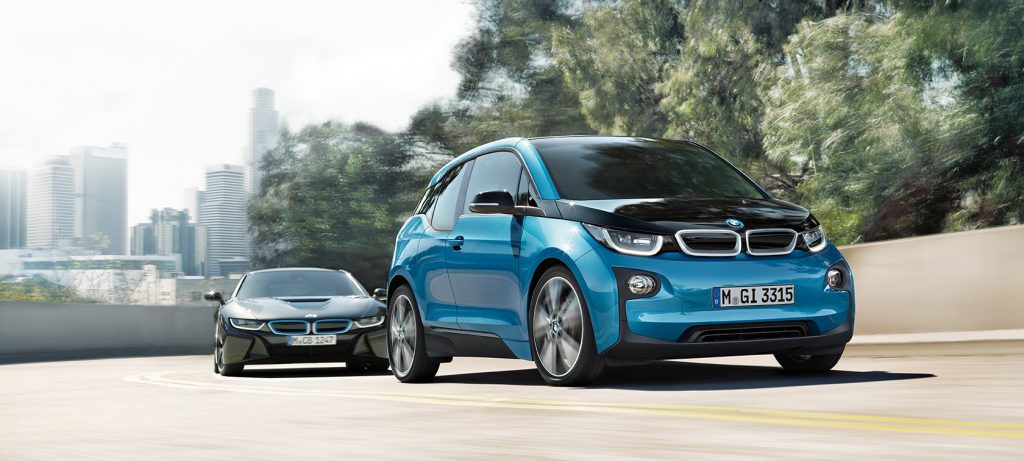
No wonder the vehement advocates of electromobility think that the manufacturers don’t really want it.
Can’t they or don’t they want to?
The question of whether the established manufacturers don’t want to or can’t produce electric cars is a complicated one. I think the answer is not black and white, not yes or no.
Firstly, there is the battery technology. It is clear that the concept of simply assembling proven, commercially available and guaranteed small cells into a battery pack was probably far too banal for the established manufacturers. On the other hand, it is also clear that as an established manufacturer, you don’t just adopt a concept like that, even though this would have been legally possible without any problems. The NIH syndrome certainly plays a role here.
From my point of view, the pouch cells from BMW, for example, are technologically superior to the Tesla battery. However, building a marketable traction battery is a triangle of costs, energy density and service life. The aim is not to be as technologically advanced as possible, but to be good and cheap.
If you look at Tesla’s margins on the Model S and X, it’s easy to see how well they have succeeded. The margins are among the highest in the entire segment, with prices that are very attractive for the segment. If you compare the TCO of the cars, they even lead the field. It is not for nothing that Tesla plays a significant role in the “Large Luxury Sedans” sub-market in almost all countries.
This cost advantage is also what makes it possible for Tesla to enter the mid-range segment in the first place. This is because the existing cars in this segment either have too little range (e.g. VW eGolf) or too high a price (e.g. BMW i3) or are sold at a loss (Chevy Bolt / Opel Ampera-e). Although BMW can show a certain success with the i3, the figures are high in comparison, for a manufacturer of this size this is a drop in the ocean. It’s hard to imagine how successful an i3 would be if it looked like a conventional 3 Series and cost around EUR 35k. I am convinced that it would be just as successful as Tesla with the Model 3.
The ability to produce batteries in large quantities at low cost will be absolutely crucial in the future. Not the best batteries, not the biggest, but the cheapest. And at the moment I can see that all established manufacturers are struggling with corresponding problems.
Psychology of the new
On the other hand, I also think that electric cars must look completely different for established manufacturers, purely in terms of psychology. We as consumers may not really be able to understand this. But imagine if you had spent your entire professional life around the complex combustion engine. Combustion engines are something emotional – for better or for worse.
Who hasn’t been annoyed to death by a combustion engine that won’t start, e.g. on a moped or lawnmower? Or been fascinated by the brute noise of a sports car? Probably most of them. The same cannot be said of the electric motor. It simply runs. In most cases without us noticing.
What is a logical, rather incidental step for us consumers (“I don’t care what drives my car, the main thing is that it drives”) is a fundamental change for the decision-makers in automotive companies. And it is only logical that this upheaval should also be visually emphasized. Seen in this light, these products are simply not customer-oriented.
Fortunately, we are slowly but surely seeing conventional body styles with electric drive. People seem to be slowly realizing that nobody wants the Batmobile. At the moment, that’s not so tragic, because most manufacturers haven’t delivered anything yet.
5 to 12?
As you can probably guess, I believe that the question of can or want falls short. Of course there are managers in the automotive industry who don’t want electromobility. That is also their right. But I think it’s presumptuous to imply that the entire industry wants to categorically undermine and prevent the transition to electromobility.
It was not easy to correctly assess the development of battery technology. Only those who study it intensively understand how quickly the costs come down and how quickly the economies of scale in production take effect. Seven years ago, manufacturers were not concerned with batteries and therefore could not foresee that the BEV could ever be produced at competitive costs. The decisions were made on the basis of this knowledge, to the best of their knowledge and belief.
Tesla should probably have taken a closer look. Because with the success of the Model S and the economic “rationale” that can even be derived from the public figures, you could have seen very early on why they are pushing electromobility: Because sooner or later it will be cheaper to build an electric car than a combustion engine. And the bottom line is that the product will be significantly better.
Can’t the established manufacturers compete with electric mobility? I think yes, at the moment the established manufacturers can’t compete with Tesla, at least in the luxury segment. Nobody can simply steal the show in such a lucrative niche. If they could stop it, they would.
However, to conclude from this that the established manufacturers are lost and cannot catch up again is wrong in my opinion. Especially as the industry is now alarmed and is finally making the appropriate investments. And these were and are bitterly needed to make things work.
Artikel auf Social Media teilen: